
Gastronomy is far more than the simple act of cooking; it is a holistic discipline that bridges the gap between the natural environment and our dining tables. At its core, the culinary arts encompass everything from understanding the agricultural origins of raw ingredients to applying rigorous scientific principles in the kitchen, and finally, presenting dishes with aesthetic precision. Whether you are a passionate home cook looking to elevate weekend meals or a mindful consumer hoping to reduce your environmental footprint, mastering these elements transforms daily sustenance into an extraordinary, conscious experience.
Approaching food with a gastronomic mindset allows you to make informed decisions that benefit both your palate and your household budget. By exploring the interconnected themes of seasonal sourcing, ethical consumption, traditional fermentation, modern culinary techniques, and professional presentation, this comprehensive resource will provide you with the foundational knowledge required to navigate the modern food landscape with absolute confidence.
One of the most effective ways to revolutionise your home cooking is by aligning your diet with the natural agricultural calendar. Seasonal gastronomy is not merely a trend; it is a fundamental economic and environmental practice.
Understanding when specific ingredients are naturally abundant is the key to halving a typical £100 weekly grocery bill. For instance, buying asparagus in December is a notorious expenditure that not only wastes money due to high import costs but also significantly harms the environment through excessive food miles. Conversely, learning when to bulk buy British root vegetables for optimal cellar storage ensures you have access to cheap, nutrient-dense ingredients throughout the colder months.
To truly capitalise on seasonal economics, it is highly recommended to build a flexible meal plan around discounted local market surplus. Rigidly adhering to a specific recipe often forces you to purchase expensive, out-of-season items, which is a common error that simultaneously drives up both food costs and household waste.
When fresh, local produce is scarce during the winter, consumers often face a dilemma regarding nutritional quality. Interestingly, studies consistently show that frozen produce—which is flash-frozen at the peak of ripeness—often retains better nutritional value than imported fresh vegetables that have spent weeks in transit.
Sourcing animal proteins ethically requires navigating a complex landscape of supermarket labels, supply chains, and environmental impacts. True traceability ensures that your consumption aligns with rigorous animal welfare and ecological preservation standards.
Demystifying certified sustainable seafood at supermarket counters is crucial for protecting vulnerable marine ecosystems. Consumers must learn to identify legitimate certifications, such as the MSC blue tick, and decipher often confusing catch zones. Unfortunately, vague labelling tricks are frequently used to disguise depleted fish stocks as eco-friendly choices.
When selecting seafood, the method of capture is just as important as the species. For example, pole-and-line caught tuna boasts a minimal bycatch risk, whereas dredged scallops can devastate the seabed. Furthermore, while aquaculture is often touted as a solution, farm-raised salmon frequently causes more ecological damage than wild catch due to concentrated waste and chemical parasite treatments. Opting for species like British mackerel during its most plentiful season guarantees both exceptional freshness and sustainability.
Adopting farm-to-table ethics is the only reliable way to ensure traceability in your meat consumption. Despite charging premium prices, many large supermarket supply chains cannot guarantee genuine animal welfare, often employing a “localwashing” deception to mimic artisan farming.
To source meat responsibly, consider these practical steps:
Fermentation is an ancient culinary pillar that enhances both the flavour profile and the nutritional bioavailability of raw ingredients. Mastering these techniques at home requires an understanding of wild microbiology and rigorous temperature control.
Executing safe probiotic lacto-fermentation without expensive equipment is entirely possible, even in a damp domestic kitchen. The secret lies in maintaining a sterile environment and calculating the perfect brine ratio—crucial for achieving crunchy autumn carrots rather than spoiled vegetables.
Common pitfalls can easily ruin a batch. For example, using standard table salt, which often contains anti-caking agents and iodine, can ruin cabbage fermentation and encourage the growth of dangerous moulds. Similarly, temperature fluctuation is a primary error that turns sauerkraut into an unappetising mush. To keep ingredients safely submerged without buying expensive glass weights, a reserved outer cabbage leaf wedged beneath the jar shoulder is a highly effective, cost-free alternative.
Rescuing and maintaining a vigorous sourdough culture during cold British winters is a common challenge for home bakers. Wild yeast colonies thrive in stable warmth, meaning you must create a dedicated micro-climate in a drafty kitchen for consistent, reliable fermentation.
If your starter smells strongly of acetone and refuses to rise before baking, it is not dead; it is simply starved and overly acidic. To reinvigorate a sluggish starter quickly, feeding it wholemeal rye flour often yields faster results than strong white bread flour due to the higher mineral and nutrient content. Additionally, always be wary of the tap water chlorine trap, which can massacre delicate wild yeast colonies instantly. Leaving tap water out overnight allows the volatile chlorine to dissipate naturally before mixing your dough.
Molecular gastronomy relies on chemistry and physics to transform the textures and presentations of familiar foods. While it may sound intimidating, applying basic molecular techniques safely can spectacularly elevate basic weekend baking and modern dinner party menus.
For beginners, mastering hydrocolloids is the perfect entry point. Using agar-agar successfully allows you to create stable, beautiful fruit caviars at home, provided you measure meticulously. An incorrect dosage disaster is the most common reason spherification attempts turn into inedible sludge. Precision is absolutely non-negotiable.
When attempting to stabilise savoury foams, beginners often debate between soy lecithin and xanthan gum. Soy lecithin is generally superior for creating light, airy foams that hold their delicate structure on the plate. Crucially, domestic cooks must recognise strict safety boundaries; while precise temperature manipulation is fantastic for enhancing chocolate textures, working with liquid nitrogen is far too dangerous and impractical for standard home kitchen environments.
Hosting a memorable dinner party requires a delicate balance of ambitious culinary vision and pragmatic time management. Furthermore, the way a dish is presented profoundly influences the psychological perception of its taste and quality.
Designing professional 5-course degustation menus for home dinner parties hinges on balancing flavour profiles across successive small plates without overwhelming your guests’ palates. A common portion control mistake leaves dinner guests uncomfortably stuffed long before the main course even arrives.
The true secret to a stress-free evening lies in strategic sequencing. Pre-plating cold appetisers is a tactical move that saves your entire hosting timeline, allowing you to welcome guests with a drink rather than rushing in the kitchen. When prepping multiple hot dishes, calculating the exact sequence to utilise a single domestic oven requires mapping out cooking temperatures and resting times meticulously. To elevate complex seafood starters further, consider the pairing carefully; sometimes, botanical mocktails offer a more nuanced acidic contrast than traditional wine pairings.
High-end visual culinary presentation is a powerful tool to elevate budget meals into luxurious dining experiences. A cluttered plate subconsciously ruins the perception of flavour by visually confusing the diner.
Ultimately, true gastronomy is a continuous journey of learning and refinement. By sourcing thoughtfully, embracing traditional techniques like lacto-fermentation, and applying a critical, artistic eye to both your grocery budget and your final plating, you can consistently transform everyday meals into extraordinary culinary achievements. The key is to remain endlessly curious, deeply respect your raw ingredients, and never be afraid to experiment within the safe boundaries of culinary science.
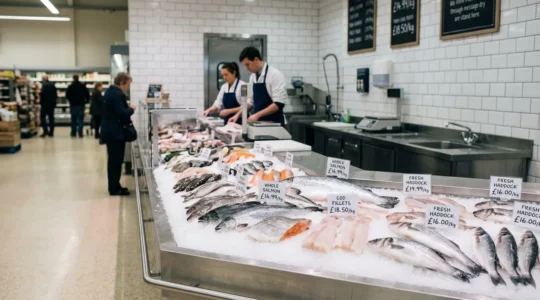
In summary: Farmed salmon often carries significant environmental costs, including high mortality rates and disease, which are not always transparent to consumers. The fishing method (e.g., pole-and-line vs. scallop dredging) is frequently a more critical indicator of sustainability than the…
Read more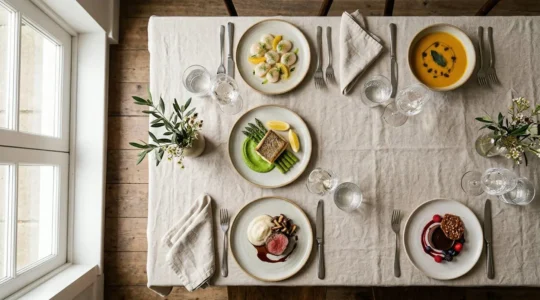
The secret to a Michelin-style dinner party isn’t better recipes; it’s adopting a professional chef’s system for managing flavour, time, and perception. Structure the meal’s “sensory arc” by progressing from delicate to robust flavours to avoid palate fatigue. Use precise…
Read more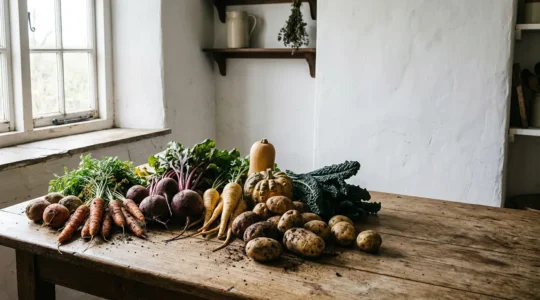
The secret to drastically cutting your food bill isn’t just “eating seasonally”—it’s adopting a “surplus-first” mindset that turns local abundance into a well-managed kitchen economy. Prioritise buying what’s plentiful and cheap at local markets or farm shops, then build meals…
Read more