
Creating a truly restorative domestic space goes far beyond simply choosing matching cushions or following fleeting design trends. True home decoration and management is a holistic discipline that sits at the intersection of aesthetic appeal, spatial psychology, and daily functionality. Whether you are attempting to transform a cramped urban flat into a calm sanctuary or looking to future-proof a period property, your environment directly dictates your physical comfort and mental well-being.
Today, our homes are asked to perform multiple, often conflicting roles. They are our places of rest, our executive workspaces, and our personal ecosystems. Balancing these demands requires a strategic approach to design. By understanding the foundational principles of spatial geometry, lighting psychology, and environmental control, you can construct a living space that actively supports your lifestyle rather than passively housing it. This comprehensive exploration delves into the essential pillars of modern domestic design, offering actionable insights to elevate your everyday living experience.
One of the most profound challenges in modern living is managing spatial constraints. The way we arrange our physical environment can fundamentally alter our subconscious perception of room size. For instance, relying heavily on dark, heavy furniture in a compact room absorbs light and visually compresses the boundaries of the space, creating an oppressive atmosphere.
To counteract cramped conditions, strategic storage is paramount. Traditional rigid furniture often creates awkward dead zones, particularly in period properties with uneven alcoves or non-standard dimensions. Embracing adaptive solutions ensures your space remains fluid.
However, beware the trap of cheap flat-pack furniture. These items frequently warp under the weight of heavy books or media equipment, ultimately degrading the room’s aesthetic. Investing in high-quality, adaptable modular storage is a superior long-term strategy that protects your belongings and enhances visual harmony.
Storage solutions are only effective if the volume of possessions is actively managed. Decluttering is often hindered by intense emotional guilt, particularly regarding sentimental items. To maintain momentum, it is crucial to tackle room decluttering in a logical sequence. Start with low-emotion zones like the bathroom or pantry to build decision-making muscles before approaching sentimental archives. Remember, achieving a minimalist urban living space is not about creating a sterile, clinical waiting room, but rather about deliberately curating items that add genuine value and tactile comfort to your daily life.
The visual temperature of a room dictates how we feel the moment we cross the threshold. During gloomy winter months, maximizing natural light becomes a biological necessity. Applying Nordic neutral tones is an excellent strategy, but it requires careful execution to prevent the room from feeling flat or unwelcoming.
A common misconception is that painting a dark, north-facing room brilliant white will brighten it. In reality, without natural sunlight to bounce around, stark white simply highlights the shadows, making the space feel significantly colder. Success lies in understanding undertones.
As the day transitions to evening, your lighting must shift to support your circadian rhythm. Overhead LED lighting is notorious for emitting blue light frequencies that destroy your brain’s ability to produce melatonin, the essential sleep hormone. To cultivate a cozy hygge atmosphere perfect for decompressing after a hectic commute, you must map multiple low-level light sources. By positioning warm-toned table lamps, floor uplighters, and wall sconces strategically, you create pools of restful illumination that signal to your body that it is time to wind down.
With remote work becoming a permanent fixture, the makeshift dining table desk is no longer viable. Spending hours on dining room chairs actively destroys your pelvic tilt, leading to chronic lower back issues within mere minutes. Designing a home office that commands respect on professional video calls while protecting your physical health requires strict attention to ergonomic details.
Your physical interface with your workspace dictates your productivity and long-term joint health. The classic coffee table desk setup is particularly hazardous, as it compresses your lungs and restricts deep breathing.
Integrating this technology seamlessly into high-end living room designs involves clever concealment. Utilize under-desk cable management trays and match monitor arm finishes to your existing hardware (like brass or brushed steel) to maintain a cohesive aesthetic. When the workday ends, having a system to stow away a dual-monitor setup quickly allows your home to transition back to a restful sanctuary.
Modern, highly insulated flats often suffer from stagnant indoor air, trapping volatile organic compounds (VOCs) emitted by synthetic furnishings and cleaning products. Building restorative natural ecosystems indoors is a highly effective way to purify your environment.
Different plants offer varying benefits and require specific microclimates. While Snake Plants are exceptional at removing VOC toxins from bedrooms at night, Calatheas demand a replicated rainforest humidity microclimate to thrive in a dry centrally-heated flat.
The greatest threat to these indoor ecosystems is the overwatering mistake, which causes root rot in the vast majority of failing houseplants. Furthermore, using dead, nutrient-depleted soil in potted plants inevitably leads to depressing fungus gnat infestations. Establish a strict watering schedule based on soil moisture rather than the calendar, and ensure you repot rootbound plants like Monsteras just before the spring growth cycle to guarantee continuous vitality.
The kitchen is the operational heart of the home, but it is also the primary source of domestic waste. Transitioning to a zero-waste system in a small urban flat is entirely achievable with the right infrastructure. Relying on standard biodegradable bin liners is often a false economy, as they rarely decompose properly in anaerobic local authority landfills.
Managing organic waste indoors requires odourless, efficient systems.
Managing a modern home involves a significant, often invisible cognitive load. Automating daily routines and environmental controls not only reclaims hours of family time weekly but also drastically reduces energy consumption.
Leaving the central heating on low all day under the guise of efficiency actually wastes massive amounts of gas. Instead, using automated smart home integration can drastically slash winter heating bills.
Retrofitting Smart Thermostatic Radiator Valves (TRVs) allows you to create a zonal heating system without draining your entire plumbing network. This ensures you only heat the rooms you are actively using. By syncing smart blinds with these thermostats, you can automatically maximize solar gain during crisp winter afternoons. Be wary of poorly configured geofencing setups, which might trigger the boiler unnecessarily when you are just passing through the neighborhood. When programmed correctly, a tailored morning routine can preheat the bathroom, open the blinds, and start the coffee machine, orchestrating a seamless start to your day using off-peak energy tariffs.
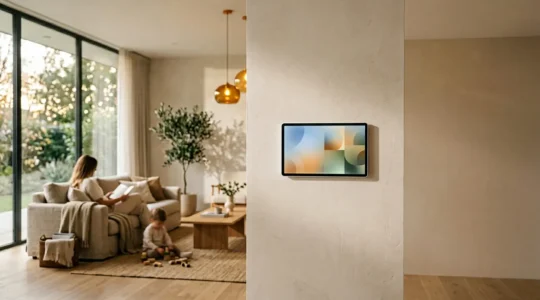
In summary: Treat your smart home not as a collection of gadgets, but as a « Domestic Operating System » designed for efficiency. Reduce cognitive load by automating decision-making around appliance management and daily routines. Implement a « priority queuing » system for heavy…
Lire la suite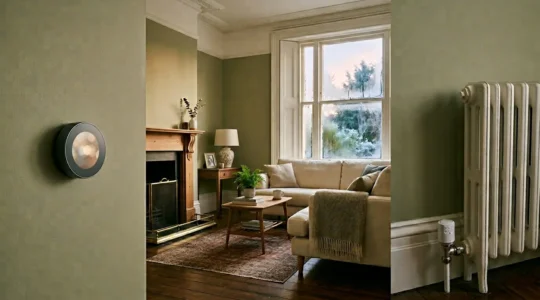
Contrary to popular belief, leaving your heating on low all day is a costly mistake. The real key to slashing UK energy bills is not constant heat, but precision automation. Your boiler wastes huge amounts of gas by ‘cycling’ on…
Lire la suite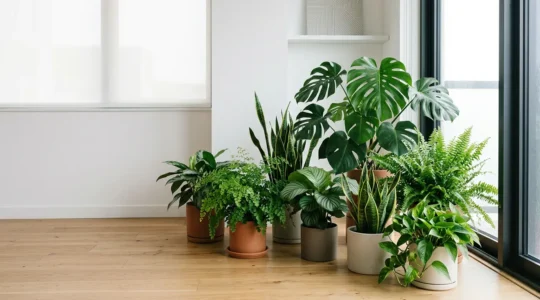
The secret to purifying indoor air isn’t buying more ‘air-purifying’ plants; it’s engineering a bioactive ecosystem where the soil does the heavy lifting. The vast majority of pollutant filtration occurs in the soil’s microbial community (the rhizosphere), not just the…
Lire la suite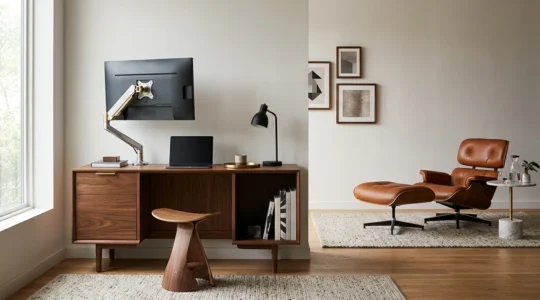
In summary: Your living room’s beauty shouldn’t be compromised by clunky office equipment; the solution is « stealth ergonomics. » Focus on adapting existing furniture with hidden supports and selecting dual-purpose pieces that transform for work and revert for leisure. Eliminate visual…
Lire la suite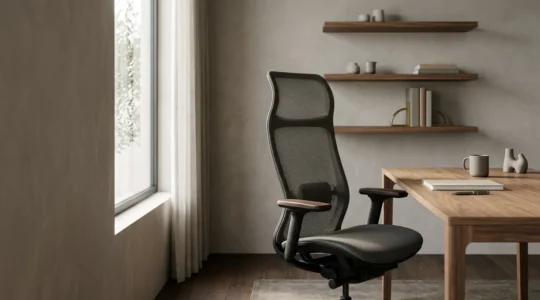
In summary: Your video call background is not a passive backdrop; it’s an active tool that influences others’ perception of your competence through spatial psychology. True executive comfort comes from ergonomic performance (like breathable mesh chairs), not traditional status symbols…
Lire la suite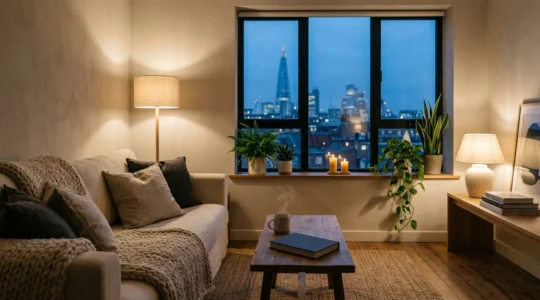
Contrary to popular belief, true Hygge isn’t about scattering candles and throws; it’s a deliberate neuro-sensory reset designed to dismantle commute-induced stress from your nervous system. Overhead cool-toned LED lighting actively suppresses melatonin, the hormone your brain needs to switch…
Lire la suite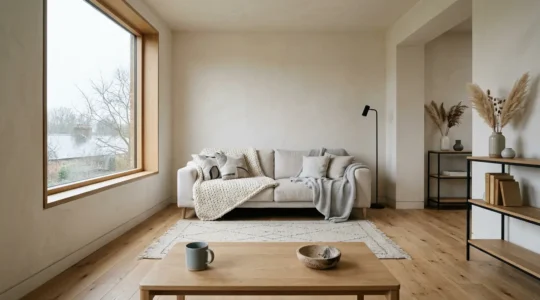
In summary: Stop fighting cold, northern light with brilliant white; it amplifies coolness. Instead, use neutrals with soft yellow or pink undertones to absorb and warm the light. Counteract the flatness of neutral palettes by layering a rich variety of…
Lire la suite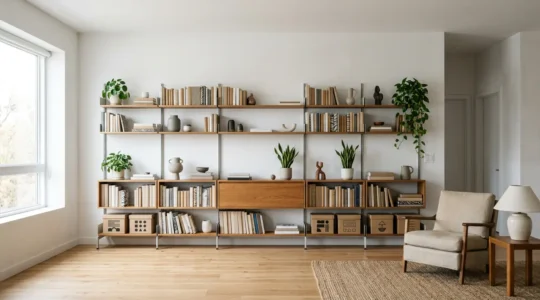
The biggest hidden expense of renting isn’t the deposit; it’s the recurring cost of disposable furniture that never quite fits your current or future home. Adaptable modular systems act as a portable financial asset, moving with you and eliminating the…
Lire la suite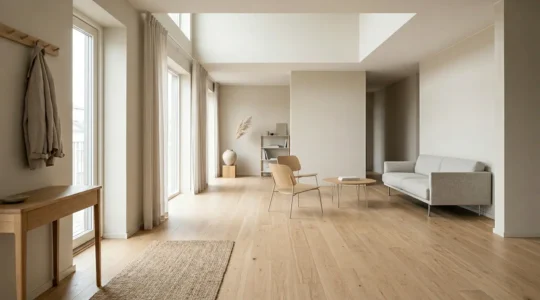
The key to a calm minimalist flat isn’t ruthless decluttering, but a psychological shift in how you perceive space, light, and objects. Furniture’s « visual weight, » not its physical size, dictates how large a room feels. Warm, textured neutrals and strategic…
Lire la suite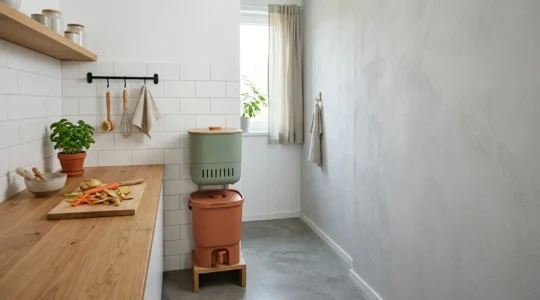
Achieving a truly zero-waste kitchen in a small flat is possible without the smells, pests, or mess you fear. Standard « biodegradable » bags often fail in landfills; the solution lies in a controlled indoor system. A sealed Bokashi bin ferments all…
Lire la suite