
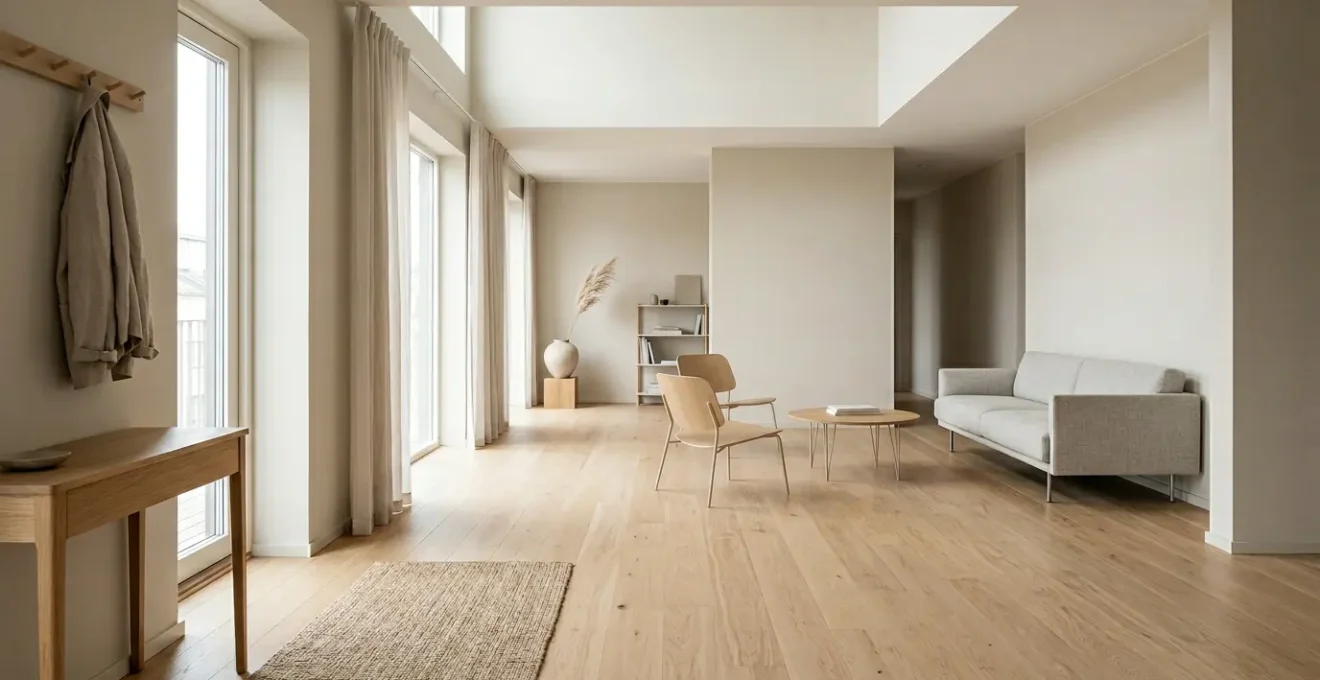
The key to a calm minimalist flat isn’t ruthless decluttering, but a psychological shift in how you perceive space, light, and objects.
- Furniture’s « visual weight, » not its physical size, dictates how large a room feels.
- Warm, textured neutrals and strategic lighting are more effective than stark white in London’s grey light.
Recommendation: Start by tackling the one small area that causes the most daily friction to build momentum and prove to yourself that change is possible.
Living in a 50m² London flat often feels like a constant negotiation with space. For renters overwhelmed by visual clutter, the desire for mental clarity can seem perpetually out of reach, hemmed in by walls that feel a little closer each day. The common advice—add mirrors, paint everything white, buy a sofa bed—scratches the surface but often fails to address the root of the problem: the psychological weight of our environment.
These conventional tips treat the symptoms, not the cause. They overlook the profound connection between our mental state and the sensory information our home feeds us. The real transformation from a cramped apartment into a calm, minimalist sanctuary doesn’t come from owning less, but from understanding the spatial psychology behind our choices. It’s about consciously curating an environment that actively soothes the mind by manipulating perceptions of volume, light, and our emotional attachment to objects.
But what if the secret to making a space feel larger wasn’t about illusion, but about intention? What if brilliant white paint was actually making your north-facing room feel colder? This guide moves beyond the platitudes to explore the architectural and psychological principles that create genuine serenity. We will delve into how to manage the emotional friction of decluttering, why the right furniture legs are more important than the tabletop, and how to harness the specific quality of British light to your advantage.
By understanding these deeper mechanics, you can architect a space that not only looks bigger but feels fundamentally calmer. This article provides a structured path to achieving that, breaking down the process into actionable, psychologically-informed steps.
Summary: An Architect’s Guide to Creating a Minimalist Sanctuary in a Small Flat
- Why Dark Heavy Furniture Subconsciously Shrinks Your Perception of Room Size?
- How to Declutter Sentimental Items Without Experiencing Intense Emotional Guilt
- Which Opens Up Narrow Hallways Better Between Floating Shelves and Traditional Bookcases?
- The Over-Minimalism Mistake That Turns Cozy Homes Into Sterile Clinical Waiting Rooms
- In What Order Should You Tackle Room Decluttering to Maintain Momentum?
- How to Manage an Odourless Bokashi Bin Under the Kitchen Sink Successfully
- Why Painting a Dark Room Brilliant White Actually Makes It Feel Colder?
- How to Apply Nordic Neutral Tones to Maximize Natural Light During Gloomy British Winters
Why Dark Heavy Furniture Subconsciously Shrinks Your Perception of Room Size?
The feeling of being cramped is not just about physical dimensions; it’s a psychological response to visual information. Our brains perceive space based on cues like uninterrupted floor lines and the interplay of light and shadow. Dark, heavy furniture that sits squarely on the floor acts as a visual barrier, effectively breaking up the continuous plane of the flooring and creating solid, light-absorbing blocks. This introduces a high degree of visual weight, making the room feel smaller and more crowded, regardless of the furniture’s actual footprint.
This isn’t just an abstract design theory. A scientific study explored how furnishings impact our sense of space. The findings confirmed that the presence of furniture consistently makes rooms feel less spacious. The research highlights that furniture density has a complex psychological effect, influencing not only our perception of spaciousness but even our estimation of a room’s height. This explains why a large, dark sofa can feel like it’s « sucking the air out » of a room.
The solution lies in choosing furniture with low visual weight. This is where « leggy » furniture—pieces elevated on slender supports—becomes transformative. By raising a console, sofa, or cabinet off the ground, you allow light to travel underneath and preserve the unbroken sightline of the floor. The eye perceives the entire floor area, creating an immediate sense of openness and volume.
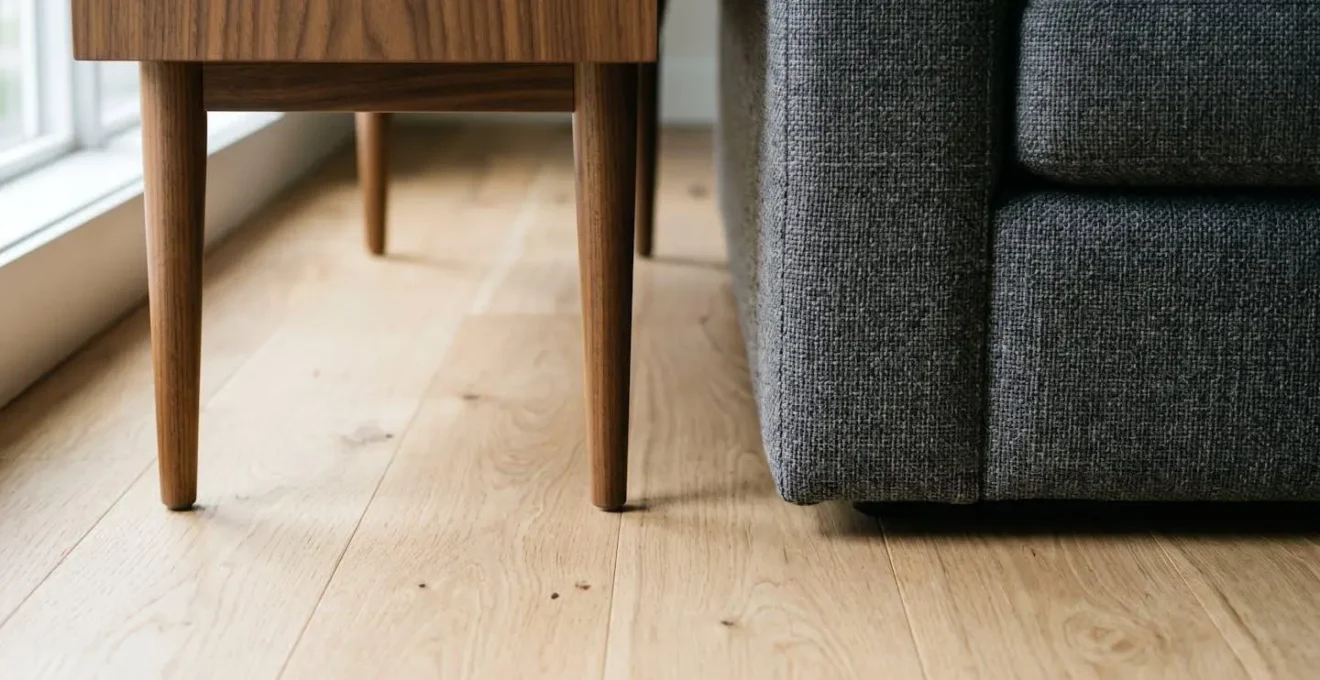
As this comparison shows, the difference is profound. The raised legs create transparency and flow, while the solid base creates a visual dam. For a small 50m² flat, opting for furniture with a lighter, elevated profile is one of the most powerful changes you can make to recalibrate your subconscious perception of the space, making it feel significantly more expansive and breathable.
How to Declutter Sentimental Items Without Experiencing Intense Emotional Guilt
The most significant barrier to a minimalist home is often not the volume of stuff, but the emotional weight of certain objects. That collection of postcards from a past relationship, a chipped mug from a grandparent, clothes that no longer fit but hold memories—letting go of these items can feel like a betrayal of our own history. This intense feeling of conflict is not just in your head; it’s rooted in your brain’s architecture. The process triggers a very real sense of pain and internal conflict.
This neurological tug-of-war is precisely why a purely logical approach to decluttering sentimental items fails. As the experts at Method Seattle explain, the brain region responsible for this feeling is deeply connected to our sense of self:
The Ventromedial Prefrontal Cortex is the part of the brain where sentimental activity happens; the home of ‘want power’ and sense of self. It’s also the region of the brain associated with conflict and pain.
– Method Seattle, Tame The Madness: Sentimental Decluttering
To overcome this, you need a strategy that respects the emotion while creating gentle detachment. The « quarantine box » or « staging » method is highly effective. Instead of making a final, painful decision on the spot, you box up the ambivalent items, label the box with a future date (e.g., six months from now), and store it out of sight. This act doesn’t discard the memory; it simply moves the object out of your daily visual field. After the time has passed, you can revisit the box. More often than not, the emotional friction has dissipated, and you can let the items go without the initial pang of guilt, knowing you gave yourself the time and grace to process the attachment.
Which Opens Up Narrow Hallways Better Between Floating Shelves and Traditional Bookcases?
The hallway is the artery of the home, yet in a small London flat, it’s often a narrow, dark passage that becomes a dumping ground for coats and shoes. The instinct to add storage here is correct, but the choice of storage can either solve the problem or exacerbate it. A traditional, floor-standing bookcase, even a slim one, imposes itself on the space. It consumes precious floor area and casts shadows, making the corridor feel even more constricted.
Floating shelves are unequivocally the superior solution for narrow hallways. By mounting shelves directly to the wall and eliminating any floor support, you achieve two critical psychological victories. First, you maintain an unbroken floor line, which, as we’ve discussed, is a primary cue for spaciousness. Second, you create storage with almost zero visual weight. The shelves appear to hover, drawing the eye upwards and away from the narrow confines of the floor plan. They provide the necessary function without visually encroaching on the limited width.
This approach is backed by real-world design analysis. One extensive review of small hallway solutions demonstrated a clear winner in the battle for space.
Case Study: Narrow Hallway Storage Solutions
An interior design analysis of 27 narrow hallway transformations found that floating shelves and other off-the-floor solutions consistently saved more usable space than traditional bookcases. The studies particularly highlighted the importance of preserving the « shoulder-to-hip movement zone, » which is critical in passages narrower than 36 inches. For maximum efficiency, recessed shelving built into wall cavities proved to be the ultimate solution, offering storage that doesn’t encroach on the walkway at all.
For renters who cannot build into walls, the principle remains the same: get storage off the floor. Slim, wall-mounted units and floating shelves are not just a stylistic choice; they are a strategic tool for reclaiming the feeling of passage and flow in the most challenging transitional spaces of a small home.
The Over-Minimalism Mistake That Turns Cozy Homes Into Sterile Clinical Waiting Rooms
In the quest for a calm, decluttered space, it’s easy to over-correct. By removing all personal touches, textures, and layers, we can strip a home of its soul, trading chaotic clutter for a cold, clinical emptiness. This is the over-minimalism trap: creating a space that is technically « clean » but feels sterile, impersonal, and unwelcoming—more like a laboratory than a living room. A home needs to reflect the humanity of its inhabitants; it needs warmth and personality to feel like a true sanctuary.
The antidote to this is not more stuff, but more texture. This is the core principle of Sensory Minimalism, also known as « warm minimalism. » It’s an approach that champions simplicity and clean lines but intentionally layers in natural materials, tactile surfaces, and curated personal objects to create a sense of comfort and soulfulness. Instead of a bare white box, you create an environment rich with sensory input: the rough grain of a wooden bowl, the softness of a woollen throw, the gentle diffusion of light through a linen curtain.
As Abode Above Interiors aptly puts it, the goal is not perfection but personality. It’s about « soulful simplicity » where you consciously add back curated personal touches that tell your story. This could be a small stack of art books, a single piece of cherished ceramic, or a framed photograph that brings you joy. These objects are not clutter; they are intentional points of warmth and character.
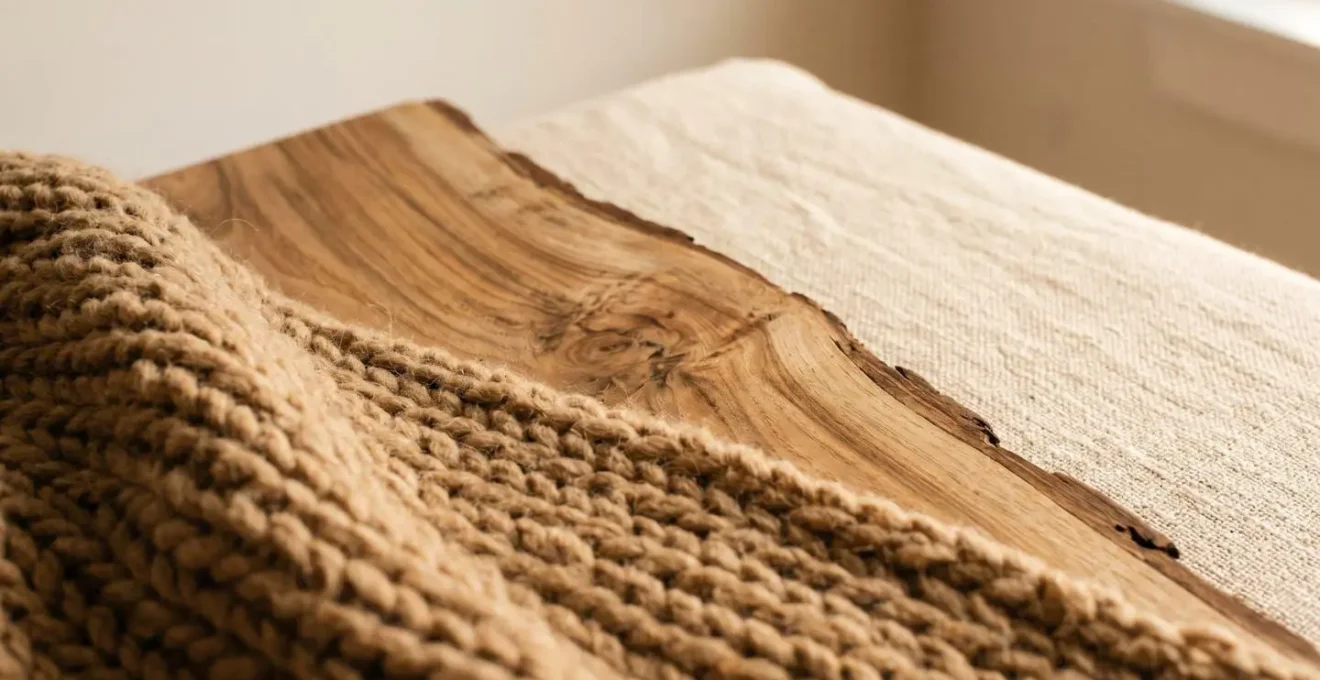
The visual above captures this ethos perfectly. It is the combination of varied, natural textures—wool, wood, linen—that creates a rich, inviting atmosphere within a minimalist framework. For the London renter, this means focusing on quality over quantity: one beautiful cashmere blanket is better than five cheap polyester throws. This approach ensures your home remains a calm refuge that is also a warm, personal, and deeply human space.
In What Order Should You Tackle Room Decluttering to Maintain Momentum?
The thought of decluttering an entire 50m² flat is paralyzing. Faced with a mountain of decisions, the most common reaction is to do nothing at all. The key to breaking this inertia is not to think about the entire project, but to start with a single, strategic first step that delivers a quick, visible win. This success builds the psychological momentum needed to continue.
The most effective strategy is the « High-Impact First » principle. Instead of starting with the biggest mess or the most emotionally charged area (like a box of old photos), you identify the one small space that causes the most daily friction. This is often the kitchen counter, the entryway console, or the chair in the bedroom that has become a second wardrobe. These are the areas that drain your energy every single day. By conquering one of these small but highly visible zones first, you get an immediate return on your effort, which fuels your motivation.
The process is methodical, as outlined by decluttering experts. Start small and build strength before tackling the harder stuff. As author Courtney Carver of Be More With Less advises, you should never begin with the most difficult category:
When decluttering, don’t start with the sentimental items. It took years, before I was ready. First I had to build strength by letting go of the easier stuff.
– Courtney Carver, How To Let Go of Sentimental Items
This principle of building momentum is crucial. You can follow a simple, four-step process to ensure success:
- Identify the High-Friction Space: Pinpoint the single area causing the most daily stress (e.g., the cluttered kitchen counter).
- Select One Zone & Category: Don’t tackle the whole room. Choose one small zone (just the coffee table) and one category within it (just the books).
- Complete Fully: Finish that single zone/category completely. The visible progress is a powerful motivator.
- Establish a Habit: Immediately define a simple maintenance habit (like a 5-minute nightly reset) to prevent regression and lock in your win.
This targeted approach transforms an overwhelming task into a series of manageable, rewarding steps, making sustained progress not only possible but probable.
Your Action Plan: Audit Your Visual Noise
- Identify and list all points of ‘visual noise’ contact: cluttered surfaces, overflowing shelves, and chaotic corners that constantly signal stress.
- Conduct a full inventory of one high-friction zone, such as collecting every single item from your coffee table or desk for assessment.
- Assess each collected item for coherence against your core goal of ‘calm clarity’. Does it serve a practical or joyful purpose?
- Evaluate the item’s emotional resonance. Is it a genuinely cherished memory, or just an object kept out of habit or guilt?
- Create a simple integration plan: designate items to be kept, stored, donated, or discarded, and assign them a new, intentional home.
How to Manage an Odourless Bokashi Bin Under the Kitchen Sink Successfully
A true minimalist sanctuary engages all the senses, and that includes smell. In a compact 50m² flat, managing kitchen waste without introducing unpleasant odours is paramount. The Bokashi composting system is an excellent solution for urban dwellers, as it ferments food scraps, including meat and dairy, in an airtight container. However, success hinges on meticulous management, especially when the bin is tucked away in the confined space under a sink.
The primary key to an odourless Bokashi bin is ensuring a truly anaerobic (oxygen-free) environment. Every time you add scraps, press them down firmly to remove air pockets. Then, sprinkle a generous layer of the specialized Bokashi bran, which contains the effective microbes that will ferment the waste. The most crucial step is to seal the lid tightly immediately after. An improper seal is the number one cause of the sour, unpleasant smell associated with a failed batch.
The second critical element is managing the liquid. As the food ferments, it releases a nutrient-rich « Bokashi tea. » This liquid must be drained every 1-2 days via the spigot at the base of the bin. If left to accumulate, it will cause the contents to rot instead of ferment, producing a foul odour. This tea is a fantastic fertilizer for houseplants when diluted, turning waste into a resource. For a small flat, keeping a dedicated, clearly-labeled bottle to collect the tea can streamline the process. By being diligent with pressing, bran application, sealing, and draining, your under-sink Bokashi bin will remain completely odour-free, contributing to the calm sensory environment of your home.
Why Painting a Dark Room Brilliant White Actually Makes It Feel Colder?
The conventional wisdom for dark rooms is to paint them brilliant white to maximize light. However, in a typically grey and overcast London climate, this is often a critical mistake. A pure, stark white has no pigment of its own; its job is to reflect the light it receives. When the natural light coming through your window is cool and grey, brilliant white will simply bounce that same cool, grey light around the room, amplifying the feeling of coldness and creating a flat, lifeless atmosphere.
The effect is particularly pronounced in north-facing rooms or during the long British winters, where the light has a distinctly blueish or greyish cast. Instead of making the room feel bright and airy, the stark white walls can make it feel sterile and unwelcoming, like a hospital ward. The colour lacks the inherent warmth needed to counteract the cold quality of the ambient light. It highlights shadows and can make the space feel stark and uncomfortable, the exact opposite of the calm sanctuary you’re trying to create.
The science behind this lies in colour temperature and undertones. Brilliant white has a high Light Reflectance Value (LRV), meaning it reflects a lot of light, but it does so indiscriminately. The solution isn’t to abandon light colours, but to choose off-whites or pale neutrals with warm undertones. A white with a subtle yellow, pink, or beige base will absorb the coldness of the grey light and reflect back a softer, warmer glow. These colours have a similar high LRV but possess an underlying warmth that makes a room feel cozy and inviting, even on the gloomiest of days. They work *with* the available light to create a comfortable, enveloping space rather than just crudely reflecting its coldness.
Key Takeaways
- Focus on « visual weight » by choosing leggy furniture to keep floor lines clear; this has more impact than furniture size.
- Combat emotional clutter with a slow, staged process. Use a « quarantine box » to create distance from sentimental items without immediate guilt.
- Use warm neutrals and light bulbs around 2700-3000K, not brilliant white, to counteract grey British light and create a cozy atmosphere.
How to Apply Nordic Neutral Tones to Maximize Natural Light During Gloomy British Winters
Now that we understand why stark white fails, we can build a palette that actively works to create warmth and light during the UK’s notoriously gloomy winters. The Nordic design ethos provides the perfect blueprint. It was developed in countries with even less winter daylight, so its principles are masterfully tuned to maximizing coziness and brightness in low-light conditions. The strategy goes beyond just paint colour to encompass a holistic approach to light, texture, and materials.
The first step is to select the right wall colour. Instead of pure white, opt for complex, off-whites with warm undertones (think creamy whites, or those with a hint of pink or beige). These colours will absorb the cool grey daylight and reflect back a warmer, softer light. Beyond white, introduce muted, dusty tones from the Nordic palette—such as soft sage green, dusty blue, or muted rose. These colours have a natural, earthy quality that feels incredibly cozy and sophisticated in low light, where brighter colours can look garish.
Equally important is the temperature of your artificial lighting. A room painted in the warmest neutral will still feel cold under a cool, blue-toned LED bulb. As design experts at ReimagineHome.ai note, changing your lighting can change everything. Adopting warm light bulbs is non-negotiable for a cozy atmosphere.
Most designers recommend warm bulbs (2700–3000K) for living spaces; change the light first and everything else will read differently.
– ReimagineHome.ai, Minimalist Rooms Feeling Sterile? Warm Them Up
Finally, layer in natural textures. This is the heart of the « Hygge » effect. Limewash paint provides a soft, matte finish that diffuses light beautifully. Wool, bouclé, and linen textiles add physical and visual warmth. And natural wood—in furniture, flooring, or decorative objects—provides an organic element that grounds the space. This combination of warm tones, warm lighting, and natural textures creates a layered, enveloping sanctuary that feels bright, airy, and deeply comforting, even on the darkest winter day.
By applying these psychological and architectural principles, you move from simply decluttering your flat to consciously architecting a sanctuary. The next logical step is to begin this transformation, starting with one small, high-impact area to build the momentum for lasting change.