
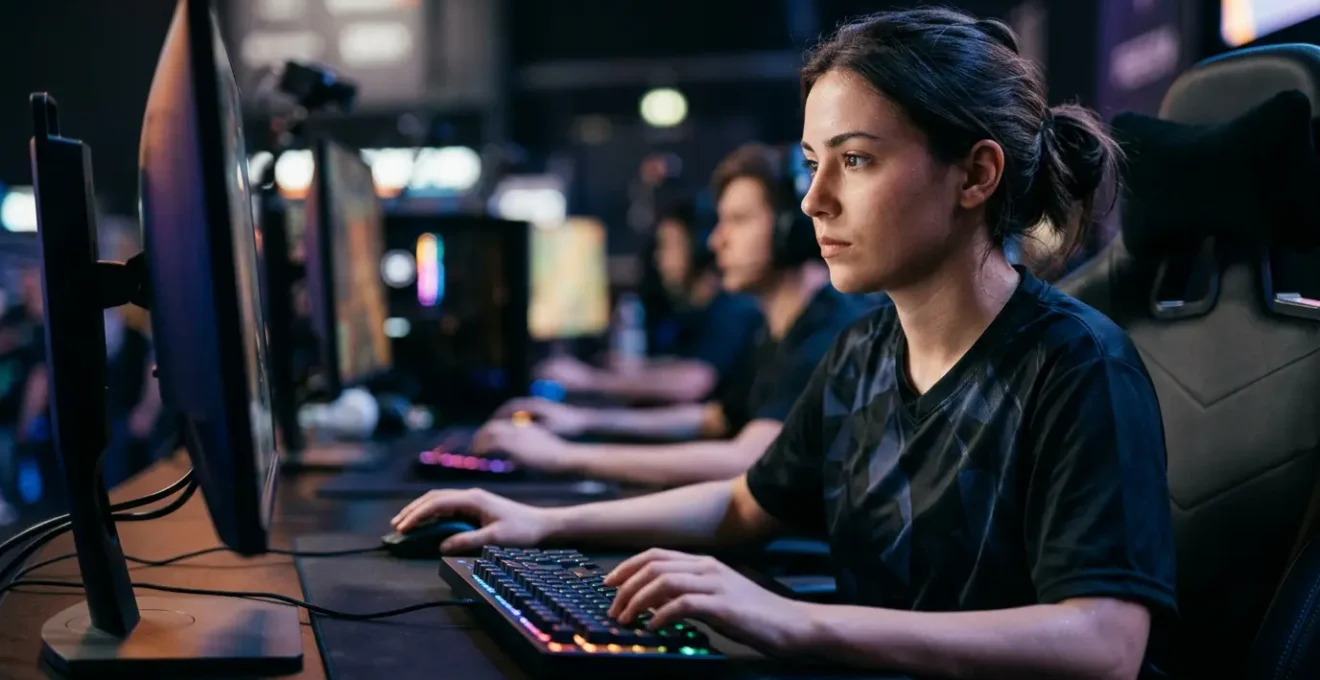
The hard truth is that your high solo queue rank might be the very thing holding your team back.
- Success in organized play isn’t about more skill; it’s about unlearning the selfish, high-variance habits that the ranked ladder rewards.
- Top amateur teams value predictable systems, ego-less communication, and strategic macro play far more than individual mechanical highlights.
Recommendation: Stop trying to be the hero. Start building a reliable, low-ego system of communication and decision-making that functions under pressure.
You have the rank, the mechanics, and a champion pool that strikes fear into the heart of the solo queue ladder. You and your friends, all individually skilled, decide to form a team. The goal: dominate local tournaments. Yet, in your first few scrims, you collapse. Communication is chaotic, shot-calls are ignored, and the synergy you expected is nowhere to be found. The team that looked unstoppable on paper gets systematically dismantled by less mechanically gifted but more coordinated opponents. What went wrong?
Most players in this position double down on what they know: grinding more games, practicing mechanics, and blaming individual mistakes. They believe the solution is to simply « play better. » But if your individual skill is already in the top percentile, the problem isn’t a lack of talent. It’s a fundamental misunderstanding of the paradigm shift required to move from an individualistic environment to a collective one.
This guide isn’t about getting better at the game—you’re already good. It’s about unlearning the very habits that made you a solo queue star. The transition to competitive play is a journey of shedding ego and building systems. It requires you to stop thinking like a player and start thinking like a component in a well-oiled machine. It’s about embracing predictability over flashy hero plays and prioritizing psychological safety over blunt criticism.
We will deconstruct the toxic habits that get players benched, analyze the true value of shot-calling versus mechanics, and provide concrete frameworks for everything from objective VOD reviews to efficient communication protocols. This is the playbook for transforming individual talent into a winning team.
Table of Contents : A Coach’s Playbook for Moving from Ranked to Roster
- Why Toxic Solo Queue Habits Will Get You Benched in an Organized Roster?
- Which Trait Do Amateur Captains Value More Between Mechanical Skill and Shot-Calling?
- How to Review Replays Objectively Without Triggering an Argument With Your Jungler
- The Draft Phase Trap That Loses Important Matches Before Minions Even Spawn
- How to Coordinate Cross-Map Rotations Using Minimal Voice Communications
- Why High-IQ Managers Fail Dismally Without Empathy During Team Restructuring?
- In What Order Should You Lower Settings to Regain Frames During Intense Boss Fights?
- How to Optimize Ray Tracing Settings Without Destroying Your PC’s Frame Rate
Why Toxic Solo Queue Habits Will Get You Benched in an Organized Roster?
In solo queue, certain behaviors are survival mechanisms. Taking all the resources, playing for your own lane, and making risky « 1v9 » plays can be the fastest way to climb. You are a variable in a sea of chaos, and maximizing your own impact is a logical strategy. In an organized roster, however, these same habits are not just suboptimal; they are systemic poison. They reveal a player who cannot operate within a team structure, making them a liability no matter their KDA.
Habits like passive-aggressive pings, sighing into the mic after a mistake, or « going quiet » are seen as individual character flaws on the ladder. In a team, they are recognized for what they are: direct attacks on the team’s psychological safety. These aren’t just moments of tilt; they are contagious behaviors. In fact, research on toxic behavior contagion reveals that exposure to a toxic teammate increases the probability of another player becoming toxic by over 7 percentage points. This creates a domino effect that can collapse a team’s mental fortitude in a single high-pressure match.
A 2020 study from Penn State went deeper, identifying five core types of toxic behaviors in competitive games. As highlighted in an analysis of League of Legends player perspectives, toxicity is a « situated action » that emerges from context, not just bad actors. What a coach sees isn’t a « toxic player, » but a player who resorts to solo queue coping mechanisms under pressure. This includes silent farming when the team needs to group, holding onto key cooldowns to save a personal stat line, or making hero plays that have a 10% chance of working instead of a 70% chance of a solid, team-based outcome. These are the actions of someone who hasn’t made the mental switch from « me » to « we. » And in my experience, that’s the fastest way to find yourself on the bench.
Which Trait Do Amateur Captains Value More Between Mechanical Skill and Shot-Calling?
Let’s be clear: baseline mechanical competence is non-negotiable. You can’t be on a competitive roster if you can’t execute your role. However, among a pool of mechanically gifted players—which is the entire applicant pool for a serious amateur team—raw mechanics quickly become a commodity. The real differentiator, the trait that gets you a starting spot and keeps you there, is your ability to contribute to the team’s collective brain: its macro play and shot-calling.
As a coach, I’ve seen countless mechanically brilliant players fail because their game sense is one-dimensional. They see the game only through the lens of their own champion and their own lane. A strong shot-caller, or even a player who can effectively follow calls, sees the game as a system of interlocking parts. They understand win conditions, track enemy cooldowns across the map, and know when to sacrifice their own lane advantage for a greater team objective. This perspective is a premium skill. As one analysis aptly puts it:
Macro play, not micro play, is what separates good LCS teams from average teams.
– Esports Edition Analysis, Shot Calling Becoming a Premium
The ideal player is « T-shaped »: they have deep expertise in their role’s mechanics (the vertical bar of the T) but also a broad understanding of the game’s overall strategy (the horizontal bar). They can win their lane, but more importantly, they know how to translate that lead into a team-wide victory. This is what captains and coaches are scouting for.

Developing this strategic arm is an active process. It’s not something you absorb by just playing more games. It requires conscious effort to expand your awareness and contribute to the team’s strategic dialogue. Here are the steps pros recommend for becoming a better shot-caller:
- Develop ‘good awareness’ in the game: Track not just your own lane but all map states and enemy movements in real-time.
- Understand ‘how you want to win as a team’: Identify your team’s overall win conditions and who the primary carry will be in different game states.
- Practice flexibility: Be willing to sacrifice your own advantage to enable stronger teammates and adapt calls based on real-time events.
- Create collaborative decision-making: A shot-caller guides discussion, they don’t dictate. Bring differing opinions to the table and build consensus.
- Master the ‘two-way street’: Know when to ask teammates to play around you because you can carry, and when to enable others.
How to Review Replays Objectively Without Triggering an Argument With Your Jungler
The VOD review is the single most important tool for a team’s growth, and it’s also the most likely place for a team to implode. When done wrong, it devolves into a blame game, reinforcing the very solo queue toxicity you’re trying to escape. The key is to shift the focus from « who messed up? » to « where did our system break down? » This requires a structured, ego-less process.
First, you must review the right material. In-game replays are useful for analyzing mechanics and positioning, but they are critically incomplete. The essential context of what was being said—or not said—is missing. An effective VOD review must capture team voice chat, because communication breakdowns are the root cause of most strategic failures. A player making a seemingly bad play might have been acting on a faulty call, or another player might have failed to communicate crucial information. Without the comms, you’re only guessing.
The review itself must be facilitated with strict ground rules. The goal is not to find fault, but to identify points of systemic failure and build protocols to prevent them from happening again. Instead of « Why did you get caught out? », the question becomes, « What information did our team lack that led to this player being in a vulnerable position? » This reframing is crucial. It changes the dynamic from accusation to collaborative problem-solving. It builds psychological safety, allowing players to admit uncertainty or mistakes without fear of being attacked. A jungler is more likely to be receptive to feedback about a pathing error if the discussion is framed around « improving our jungle tracking system » rather than « your bad gank. »
Action Plan: Your Checklist for a Constructive VOD Review
- Define the Focus: Before pressing play, agree on ONE systemic theme to analyze (e.g., « our vision control around objectives, » « our response to jungle invades »). Don’t try to fix everything at once.
- Collect Timestamps, Not Faults: Each player individually notes timestamps of key moments related to the theme. The note should be objective: « 15:32 – I moved to scuttle without mid prio, » not « 15:32 – you left me to die. »
- Analyze System, Not Player: During the review, the facilitator (captain or coach) frames the discussion around the system. Instead of « Why did you die? », ask « What information was our system missing at this moment? »
- Formulate a Protocol: For each major breakdown identified, create a simple, testable « if-then » protocol. « IF we lose mid prio, THEN the jungler will not contest the enemy’s topside buff. »
- Document and Prioritize: End the session with a written summary of 1-2 new protocols to implement in the next scrim block. This creates a tangible outcome and prevents the review from being just a complaint session.
The Draft Phase Trap That Loses Important Matches Before Minions Even Spawn
Many amateur teams believe that a « good draft » means replicating what they see pros play on stage. They prioritize meta champions, complex compositions, and flexible picks, often without considering their own team’s actual strengths. This is a classic trap. You lose the game in the first ten minutes not because of a failed gank, but because you drafted a composition your team is not equipped to execute.
The solo queue mindset is a major culprit here. On the ladder, you can often get away with first-timing a meta champion because the overall level of coordination is low. In a competitive match, every pick has ripple effects. A composition built around a scaling ADC requires the entire team to play defensively and cede early pressure. If your jungler is an aggressive, early-game player, you’ve created a fundamental strategic contradiction before anyone has even bought their first items. The draft is not about picking the five « best » champions; it’s about picking five champions that work together as a cohesive system and that your players can pilot effectively under pressure.
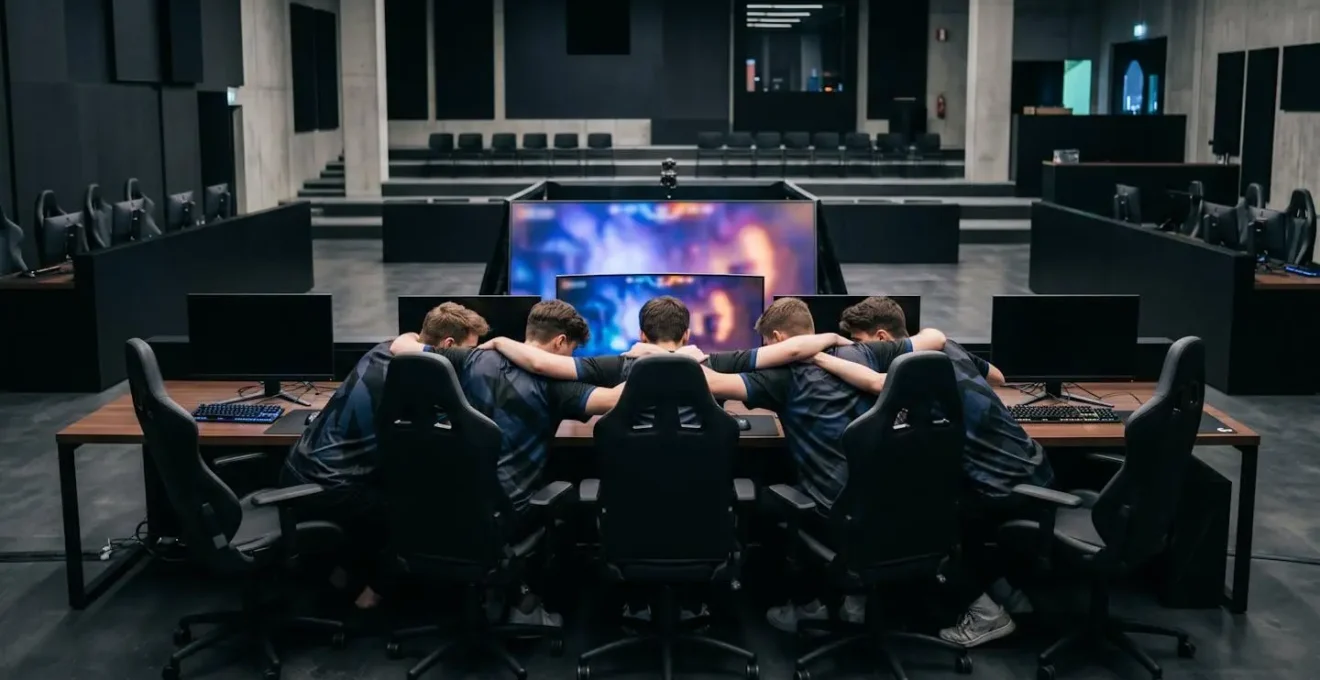
Comfort and proficiency almost always trump the theoretical « power » of a meta pick at the amateur level. A player on their 200th game of a signature champion will provide more value than that same player on their 5th game of a top-tier pro pick, even if the latter is a « better » counter in theory. A great team draft is built from the bottom up, starting with the reality of your players’ champion pools.
Case Study: How Amateur Teams Fail by Overvaluing Meta Picks
An analysis from a League of Legends coach reveals a common drafting mistake: amateur teams blindly copy pro-level drafts without understanding the context. Pro games often last longer due to fewer mistakes, making certain late-game champions more viable. Amateurs fail to account for their own champion pool limitations. The analysis provides a clear example: if a team’s top laner doesn’t play meta picks like Gnar or Ornn, a champion like Cho’Gath—often considered off-meta—becomes exponentially more valuable in that specific team’s draft because they can pilot it perfectly and the opponent can’t easily access its counters. This demonstrates that playing to your own strengths is far more effective than chasing a pro-level meta you can’t execute.
How to Coordinate Cross-Map Rotations Using Minimal Voice Communications
One of the biggest myths in amateur esports is that « good communication » means talking more. This leads to cluttered voice channels where crucial information is drowned out by panicked callouts, redundant information, and emotional reactions. The goal of elite team communication is not volume; it’s efficiency. It’s about conveying the maximum amount of information with the minimum amount of noise, freeing up your players’ mental stack to focus on execution.
The foundation of efficient comms is a shared, pre-defined language. Teams that succeed don’t just « talk, » they execute communication protocols. This involves creating a lexicon of specific, single-word calls that have a universally understood meaning within the team. « Collapse, » « Reset, » « Bait »—these aren’t just words, they are triggers for pre-planned team maneuvers. This system is complemented by standardized ping combinations that convey complex ideas without a single word being spoken. For example, an ‘On My Way’ ping followed by an ‘Assist Me’ ping on a lane can be the team’s established signal for « prepare for a tower dive. »
This systematic approach to communication is the « glue » that holds a team together under pressure. As Esports Zone UK notes, « Communication is the glue of every esports team. » This is especially true for complex actions like cross-map rotations, which require precise timing from multiple players.
Communication is the glue of every esports team.
– Esports Zone UK, Setting Success Criteria and Building Effective Teams
Building this « shared brain » requires deliberate practice. It’s about establishing if-then protocols during scrims so that responses become automatic. For instance: IF the enemy jungler shows top-side, THEN our bot lane knows they have pressure to make a play. This doesn’t require a frantic call from the top laner; it’s an automated response baked into the team’s system. Your team’s communication structure should be built with the same intentionality as your draft strategy. Here is a framework for doing so:
- Develop ‘team language’: Create consistent, single-word phrases for common actions (e.g., ‘Collapse’, ‘Reset’).
- Establish if-then protocols: Pre-plan automated responses to common game states during practice.
- Create standardized ping combinations: Assign specific meaning to ping sequences beyond the defaults.
- Implement structured speech rules: Define who calls what and when to eliminate cross-talk. Prioritize the IGL’s voice.
- Train ‘shared map awareness’: Run drills where players practice calling out information visible to everyone to build collective awareness.
Why High-IQ Managers Fail Dismally Without Empathy During Team Restructuring?
In the world of competitive gaming, we often idolize the « mastermind » captain or manager—the strategic genius who can dissect the game with cold, hard logic. This high-IQ approach is invaluable for creating strategies and analyzing data. However, when it comes to managing the human element of a team, especially during stressful periods like roster changes or strategy pivots, pure logic is not only insufficient—it’s often destructive. A manager who lacks empathy will fail, no matter how brilliant their game plan is.
A team is not a set of chess pieces. It’s a group of ambitious, often young, individuals with egos, insecurities, and personal motivations. When a manager decides to bench a player or overhaul a team’s core strategy, presenting the decision with only data (KDA, damage charts) is a recipe for resentment and disengagement. The player being benched doesn’t just see a number; they feel a personal rejection. Teammates see a shift that could threaten their own position. Without empathy, a manager cannot navigate these emotional undercurrents. They create a culture of fear, not a culture of growth.
Even the best players recognize the need for this shift from pure logic to empathetic leadership. As former Rogue and Evil Geniuses shot-caller ‘Inspired’ reflected on his own growth:
At the beginning, when I was playing on Rogue, I think I was not that good of a teammate because I didn’t care about other people’s opinion as much. Now, I think I’ve changed. I think I will be happy playing with myself.
– Kacper ‘Inspired’ Słoma, How to be a better shotcaller according to EG Inspired
This evolution from a self-focused to a team-focused, empathetic mindset is what separates good players from great leaders. A successful captain or manager understands that their job is not just to be right, but to get the team to buy into the plan. This requires active listening, adapting communication styles to different personalities, and framing feedback constructively. They communicate the « why » behind a decision, not just the « what, » and help players understand how even a difficult change benefits the collective. Here are the key balances successful leaders strike:
- Recognize that leadership is a ‘two-way street’: Don’t dictate unilaterally. Know when to enable others and when to ask the team to play around you.
- Mediate disagreements constructively: When opinions differ, involve a neutral third party to build consensus rather than forcing your « perfect » strategy.
- Adapt your communication style: Speak differently to different teammates. Not everyone responds to the same approach.
- Listen actively and evaluate feedback: Genuinely consider what others are saying. The best ideas can come from anywhere.
- Communicate the ‘why’ behind changes: Explain the strategic reasoning and emotional context for roster or strategy shifts to secure buy-in.
In What Order Should You Lower Settings to Regain Frames During Intense Boss Fights?
All the strategy, communication, and teamwork in the world are useless if your performance tanks the moment a teamfight breaks out. A stable frame rate is not a luxury in competitive play; it is the technical foundation upon which every skill is built. A single stutter or frame drop can mean a missed skillshot, a delayed reaction, or a fatal misclick. The goal is not a beautiful game, but a readable and responsive one. Yet, many players lower settings randomly, crippling visual clarity without maximizing performance gains.
There is a clear hierarchy for optimizing graphics settings for competitive MOBAs, designed to claw back the most frames with the least impact on gameplay-critical information. The biggest culprit for FPS drops during intense 5v5 fights is almost always particle and spell effects. These GPU-intensive effects clutter the screen and can cut your frame rate in half at the most crucial moments. This should be one of the first things you lower.
Conversely, some settings that seem purely cosmetic, like character model quality, can have a moderate impact on performance but are important for readability. Lowering them too much can make it harder to distinguish champions or see key animations. The principle is simple: ruthlessly cut anything that adds visual noise without providing crucial tactical information. An analysis of competitive gaming performance reveals that inconsistent teamwork, often caused by technical issues, is a greater pain point than mechanical skill alone. Stable FPS is part of a consistent system.
To ensure you’re always playing on a stable platform, follow this optimization hierarchy. It’s best practice to create a separate ‘Tournament Config’ file with these settings so you can easily switch between casual play and a competition-ready state.
Competitive FPS Optimization Hierarchy for MOBA Teamfights
- Priority 1: Disable Shadows – These have the highest performance impact with the lowest competitive value; shadows add visual noise without providing crucial tactical information.
- Priority 2: Lower Character/Spell Effects Quality – This is the main cause of FPS drops during intense 5v5 teamfights; reduce particle quality and effect density to maintain stable frame rate.
- Priority 3: Reduce or Disable Anti-Aliasing – While this smooths jagged edges, it’s a significant GPU load; competitive players prioritize frame rate over visual smoothness.
- Priority 4: Lower Texture Quality – Only reduce this if still experiencing drops; textures have moderate impact and can slightly affect ability to read the battlefield.
- Priority 5: Create a separate ‘Tournament Config’ – Build a dedicated configuration file (.ini or .cfg) with all optimizations applied, distinct from your casual play settings.
Key Takeaways
- Your solo queue rank is not a predictor of team success; it’s a measure of your ability to succeed in a chaotic, individualistic environment.
- Systemic thinking, clear communication protocols, and strategic empathy are the core skills that separate successful amateur teams from talented failures.
- Every aspect of team play, from VOD reviews to graphics settings, should be approached as a system to be engineered for reliability under pressure, not a skill to be randomly improved.
How to Optimize Ray Tracing Settings Without Destroying Your PC’s Frame Rate
For a competitive player, the discussion around ray tracing and other high-fidelity graphical settings should be very short. You should turn them off. All of them. In the context of gaining a competitive edge, these features are not just unnecessary; they are a direct handicap. They consume massive amounts of GPU resources for purely aesthetic enhancements that actively work against your primary goal: a clean, readable, and highly responsive battlefield.
The core philosophy of a competitive setup is clarity over quality. Ray tracing adds realistic lighting, shadows, and reflections. In a competitive MOBA, this translates to more visual noise. A complex reflection on the ground could obscure an enemy’s spell effect. A dynamically rendered soft shadow could camouflage a trap. These are not theoretical risks; they are practical disadvantages that you are voluntarily adding to your game.
As one competitive gaming analysis states, the objective is a readable game, not a beautiful one. High settings can obscure crucial information, while optimized low settings provide the clean canvas you need to perform.
For competitive play, the goal is not a beautiful game but a readable one. High settings can create visual noise that obscures crucial enemy abilities, whereas low settings provide a cleaner, more responsive battlefield.
– Competitive Gaming Optimization Analysis, Communication Systems Used by Top Esports Teams
If you absolutely must use ray tracing in a non-competitive context and want to maintain performance, the only viable path is to heavily leverage upscaling technologies like NVIDIA’s DLSS or AMD’s FSR. Set the upscaler to « Performance » or « Ultra Performance » mode. This renders the game at a lower internal resolution and then uses AI to upscale it, which can claw back a significant portion of the frames lost to ray tracing. However, for any match that matters, this is a moot point. The competitive answer is simple and non-negotiable: disable it.
To truly integrate these concepts, you must stop viewing them as a checklist and start seeing them as an interconnected system. Your reliable frame rate enables your mechanical skill, which is guided by your strategic understanding, which is coordinated through your communication protocol, and improved through your VOD review process. Build the system, and the success will follow.