

The solution to open-world RPG overwhelm isn’t to play less, but to consciously curate your experience by shifting from a ‘player’ to a ‘personal game director’ mindset.
- Most side quests are narrative filler; learn to identify and ignore them to protect the main story’s pacing.
- Over-optimizing your character with online build guides often removes the joy of discovery and role-playing.
- Your capacity for deep narrative engagement is a finite resource, actively depleted by habits like doomscrolling.
Recommendation: Actively build a personal ‘narrative filter’ to prioritize quests that align with your character concept, and don’t be afraid to abandon a playthrough that no longer brings you joy.
You see it on sale: a critically acclaimed, 150-hour open-world RPG. You buy it, excited for a grand adventure. Ten hours in, you open the map. It’s a galaxy of icons, question marks, and exclamation points. The main quest urges you to save the world, but a dozen villagers need you to find their lost pans or kill ten rats. You feel a wave of exhaustion, a sense of falling behind on a checklist you never asked for. You close the game and never open it again. This experience is the hallmark of choice paralysis, a common affliction for time-poor adult gamers who want deep experiences but lack the endless hours of their youth.
The common advice is often simplistic: « just focus on the main quest » or « turn off the UI. » While well-intentioned, this ignores the core appeal of these worlds—the promise of exploration and personal stories. But what if the key wasn’t to play *less* of the game, but to engage with it more intelligently? What if the solution was to stop being a passive player and become the director of your own personal adventure? The secret lies in understanding the game design systems at play and leveraging them to serve your enjoyment, not your completionist anxiety.
This guide will break down the analytical framework needed to reclaim your RPG playtime. We will explore why the « do everything » approach is a trap, how to filter game systems for meaning, and why sometimes the best choice is to walk away. It’s time to trade the burden of the checklist for the joy of a curated story.
To help you master these worlds, this article provides a structured approach. The table of contents below outlines the key strategies we’ll dissect to transform you from an overwhelmed player into a discerning director of your own epic.
Summary: A Strategic Guide to Curating Your RPG Experience
- Why Doing Every Single Side Quest Actually Ruins the Narrative Pacing Completely?
- How to Filter Out Ubiquitous Map Markers to Focus on Meaningful Story Arcs
- Which Creates More Memorable Personal Adventures Between Emergent Gameplay and Scripted Events?
- The Build Optimization Mistake That Saps All the Joy From Role-Playing
- When to Abandon a Stagnant Playthrough Instead of Forcing Yourself to Finish
- Why Algorithmic Short-Form Video Destroys Your Capacity to Enjoy Slow-Burn Narratives?
- Which Enhances Concentration for Deep Work Better Between Lion’s Mane and Cordyceps?
- How to Elevate Your Digital Entertainment Diet to Cure Chronic Evening Doomscrolling
Why Doing Every Single Side Quest Actually Ruins the Narrative Pacing Completely?
Doing every side quest ruins narrative pacing because it creates a profound disconnect between the urgency of the main plot and the triviality of side activities. This phenomenon, known as ludonarrative dissonance, shatters immersion. When your character is supposedly in a desperate race to stop a world-ending cataclysm, but spends ten hours collecting herbs or hunting wildlife for a minor reward, the central story loses all its momentum and emotional weight. Game designers place these quests to add volume and cater to different player motivations, but they are not all created equal.
Many side quests are pure filler, designed as low-cost content to make the world feel « bigger. » They are the mechanical equivalent of grinding, offering little in the way of character development or meaningful world-building. As one game development analysis aptly puts it, developers are often powerless against this self-sabotage:
There’s nothing you can do about preventing a player from following a main quest line to save the world and then stopping to go back and do a minor side-quest about killing five rats or picking five herbs or what have you.
– Game Developer analysis, Game Developer – How Side Quests Can Hurt Single Player Narratives
In contrast, the best side quests are deeply integrated with the main themes, characters, or world-state. They feel less like a diversion and more like a deeper exploration of the central conflict. A masterclass in this design is found in The Witcher 3, which often blurs the line between main and side content.
Case Study: The Witcher 3’s Bloody Baron Quest-Line Integration
The celebrated Bloody Baron arc in The Witcher 3 exemplifies optimal side quest integration. The quest begins on the critical path of finding the protagonist’s daughter, Ciri, but its tragic conclusion unfolds in optional content. The game introduces this complex family drama subtly, ensuring it doesn’t initially derail the primary mission. This approach weaves side content into the world’s fabric far more elegantly than a random map marker, maintaining narrative coherence and enriching the player’s understanding of the world’s grim realities.
How to Filter Out Ubiquitous Map Markers to Focus on Meaningful Story Arcs
To filter the noise of map markers, you must create a « Character Compass »—a personal set of rules based on your character’s motivations, not your own completionist impulse. Instead of asking « What haven’t I done yet? », ask « What would my character do? ». Is your character a noble hero, a greedy mercenary, or a pragmatic scholar? A noble hero might ignore a « kill ten wolves » quest but would absolutely investigate rumors of a monster preying on a small village. A greedy mercenary would do the opposite. This role-playing filter is the most powerful tool for transforming a map full of icons into a curated list of meaningful adventures.
This method requires you to actively engage with the game’s premise and your character concept. Before accepting a quest, read its description and consider its source. Does it come from a key character tied to the main story? Does it promise to reveal more about a location or faction you’re interested in? Or is it a generic, repeatable task from an unnamed NPC? Applying this role-playing lens is the first step in acting as your own game director, making conscious choices about what content becomes part of your unique playthrough. It’s about building a personal story, not clearing a to-do list.
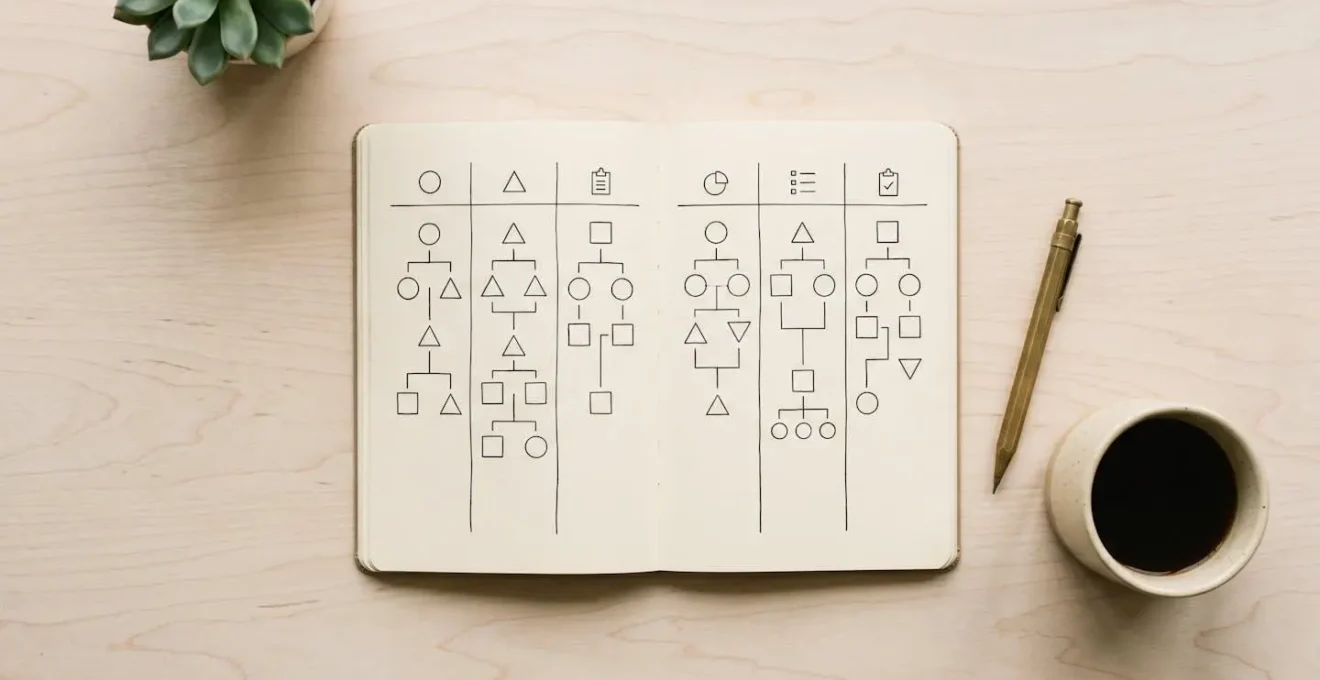
This visualization represents the act of creating order from chaos. By establishing your own priority system—your Character Compass—you can mentally sort the endless possibilities into a clear, navigable path that aligns with the story you want to experience. The goal is to move from a cluttered map to a clean, focused journal of personally relevant adventures.
Your Action Plan: Building a Narrative Filter
- Define Your Character: Before you begin, write down 3-5 core traits or motivations for your character (e.g., « seeks knowledge, » « protects the weak, » « only cares about money »).
- Assess Quest Hooks: When presented with a quest, evaluate it against your character’s traits. Does the request align with their personality or goals?
- Evaluate the Source: Is the quest-giver a significant, named character with a connection to the main plot, or a generic, unnamed NPC offering a repetitive task? Prioritize the former.
- Consider the Reward: Does the reward offer something unique (a special piece of gear with lore, a new companion) or just generic currency? Unique rewards often signal more thoughtfully designed content.
- Trust Your Gut: If a quest line starts to feel like a boring, repetitive chore, abandon it. Your time is the most valuable resource. Use it on content you find genuinely engaging.
Which Creates More Memorable Personal Adventures Between Emergent Gameplay and Scripted Events?
While heavily scripted events can provide cinematic highs, it is emergent gameplay that creates the most memorable, personal adventures. Emergent gameplay refers to the unscripted, often unexpected situations that arise from the interaction of various simple game mechanics. It’s the story you tell your friends about—not the one the game told you. It’s when a dragon attacks the town just as you’re about to turn in a quest, or when you use a combination of three different spells to bypass a puzzle in a way the developers never explicitly intended.
These moments feel personal because they are unique to your playthrough; they are a product of your choices, the game’s systems, and a bit of chaos. Scripted events, by contrast, are the same for every player. They are theme park rides—thrilling but ultimately passive experiences. Emergence is an open playground where you make the fun. This player-driven creativity is not just more memorable; it’s a powerful driver of engagement. Game design philosophy is increasingly recognizing this, as systems-driven design can lead to a 40% retention increase compared to more rigid, scripted content, because players feel a stronger sense of agency and ownership over their experience.
As a time-poor gamer, you should actively seek out games that prioritize these systems. Look for games praised for their « physics sandbox, » complex AI interactions, or flexible quest structures. These are the hallmarks of a world designed to react to you, rather than one that simply guides you down a predetermined path. Leaning into emergent possibilities—experimenting, breaking sequences, and combining mechanics in novel ways—is how you co-author your adventure with the game itself, ensuring it is a story that only you can tell.
The Build Optimization Mistake That Saps All the Joy From Role-Playing
The single biggest build optimization mistake is consulting an online guide before you even start playing. This act of « pre-solving » the game completely short-circuits the core loop of an RPG: learning, experimenting, making mistakes, and developing your own unique solutions. It transforms the act of role-playing—embodying a character and growing with them—into the joyless task of executing a set of instructions. You’re no longer playing the game; you’re following a recipe cooked up by someone else.
This dependency on min-maxed builds robs you of the satisfaction of discovery. The joy of finding a powerful new synergy between two seemingly weak abilities is lost. The tension of a difficult fight, won by the skin of your teeth with your own « imperfect » build, is replaced by the sterile efficiency of a mathematically proven damage rotation. You end up with a character that is powerful in mechanics but utterly devoid of personality or history. It’s a character built from a spreadsheet, not from experience. This sentiment is painfully common among veteran players who find their enjoyment of the genre waning.
It used to be that I would get it minmaxed on the second playthrough, but nowadays I fire up the YouTube and get a build guide before I even start. I am aware that this makes it much less enjoyable, and probably the reason why I don’t do RPGs anymore.
– Player reflection on AnandTech forums
This player’s reflection is a stark warning. The impulse to optimize from day one stems from a fear of « doing it wrong » or wasting time. But in a single-player RPG, there is no « wrong » way to build a character. The « wasted » time spent experimenting is, in fact, the game itself. Embrace the imperfect build. Make choices that feel right for your character, not for a damage calculator. The memorable stories come from the struggles and sub-optimal choices, not from a flawless execution of a guide.
When to Abandon a Stagnant Playthrough Instead of Forcing Yourself to Finish
You should abandon a stagnant playthrough the moment you start describing it as a « chore » or « work. » Forcing yourself to finish a 100-hour game you no longer enjoy is a classic example of the sunk cost fallacy. This is the cognitive bias where you continue an endeavor because of previously invested resources (in this case, time and money), even when it’s clear that the future costs—your precious, limited free time—outweigh the expected benefits. You’re not having fun anymore, but you feel compelled to « get your money’s worth. »
As a time-poor adult, your entertainment time is a fiercely valuable, non-renewable resource. Treating it like a job you have to see through to the end is the fastest way to gaming burnout. The adult gamer’s mantra should be: « Is this the best use of my two hours of free time tonight? » If the answer is consistently « no, » and the thought of launching the game fills you with a sense of obligation rather than excitement, it is time to move on. There is no shame in it. You are not « failing » the game.
Instead, reframe this decision as a successful act of curation. You have extracted the enjoyment you were going to get from the game’s opening acts, and now you are wisely choosing to invest your time elsewhere. The gaming backlog is long, and life is short. Perhaps you’ll come back to it one day with a fresh perspective, or perhaps you won’t. Either outcome is fine. Grant yourself permission to quit. It is the ultimate expression of control over your own entertainment, a powerful move for any « personal game director. »
Why Algorithmic Short-Form Video Destroys Your Capacity to Enjoy Slow-Burn Narratives?
Algorithmic short-form video platforms, like TikTok, Instagram Reels, and YouTube Shorts, systematically erode your capacity to enjoy slow-burn narratives by rewiring your brain’s reward system. These platforms deliver an endless stream of novel, high-stimulus content in 15-60 second bursts. Each swipe delivers a small, unpredictable hit of dopamine, training your brain to expect and crave constant, rapid-fire rewards. This creates a state of « attention atrophy, » where the cognitive muscles required for sustained focus and deep engagement are left to wither. Consequently, the patient, deliberate pacing of a complex RPG starts to feel boring and unrewarding by comparison.
This isn’t just a feeling; it’s a documented trend. Our collective ability to focus is diminishing in the face of these platforms, with some research revealing a 33% decline in average attention spans on social media over the last decade. The constant context-switching and shallow engagement required by these feeds are the antithesis of the « deep work » mindset needed to immerse oneself in a complex world and follow intricate plot threads.

This neurological conditioning has a direct impact on your gaming experience. When your brain is accustomed to getting its reward every 30 seconds, the prospect of a quest that involves 20 minutes of quiet exploration and dialogue can seem monumentally tedious. A landmark study from the Karolinska Institutet provided crucial evidence, finding that high social media use was specifically linked to developing inattention symptoms in children over time. Crucially, the study found no such correlation with watching TV or playing video games, suggesting the fragmented, interactive nature of social feeds is the unique culprit. To enjoy slow-burn narratives, you must first recognize that your attention span is a resource under assault.
Which Enhances Concentration for Deep Work Better Between Lion’s Mane and Cordyceps?
When considering cognitive enhancement for deep work, such as an extended RPG session, Lion’s Mane and Cordyceps mushrooms serve fundamentally different purposes. Lion’s Mane is the superior choice for enhancing concentration and cognitive function directly related to focus and memory. Cordyceps, on the other hand, excels at improving physical performance and combating fatigue. The choice between them depends entirely on the specific bottleneck you’re trying to solve: a lack of mental clarity or a lack of physical stamina.
Lion’s Mane contains unique compounds, hericenones and erinacines, that are believed to stimulate Nerve Growth Factor (NGF) synthesis. NGF is crucial for the maintenance and growth of neurons, making Lion’s Mane the go-to for tasks requiring mental clarity, learning, and complex problem-solving. It helps you untangle complex plot threads or focus on intricate character builds. Cordyceps functions differently, boosting the body’s production of adenosine triphosphate (ATP) at a cellular level. This makes it exceptional for improving physical endurance, oxygen uptake, and reducing fatigue. It’s the better choice for combating the mental fog that comes from sheer physical exhaustion after a long day, preparing your body for a long session. Indeed, a 2017 study found improved exercise tolerance in participants after just one week of Cordyceps supplementation.
The following table breaks down their distinct benefits, helping you choose the right tool for the job.
| Benefit Category | Lion’s Mane | Cordyceps |
|---|---|---|
| Primary Mechanism | Stimulates Nerve Growth Factor (NGF) synthesis | Boosts ATP production at cellular level |
| Cognitive Effects | Enhances memory, focus, and mental clarity | No direct cognitive benefits established |
| Physical Performance | Indirect benefit through improved mental engagement | Improves endurance, oxygen uptake, and reduces fatigue |
| Ideal Use Case | Deep work, complex problem-solving, learning | Physical activity, combating mental fatigue from exertion |
| Active Compounds | Hericenones and erinacines | Cordycepin and adenosine |
Key Takeaways
- Adopt a ‘Personal Game Director’ mindset: Actively curate your experience instead of passively completing a checklist.
- Create a ‘Character Compass’: Filter quests and activities based on your character’s motivations, not your completionist instincts.
- Recognize your attention as a finite resource: Counter the effects of fragmented media by consciously choosing deep, engaging entertainment.
How to Elevate Your Digital Entertainment Diet to Cure Chronic Evening Doomscrolling
To cure chronic evening doomscrolling, you must consciously elevate your digital entertainment diet by replacing passive, algorithm-fed content with active, engaging experiences like deep RPGs. Doomscrolling is a feedback loop of low-effort consumption and low-grade anxiety. You are not in control; the algorithm is. The « cure » is to intentionally choose an activity that demands your full cognitive participation and offers a more profound sense of reward—a sense of agency, immersion, and accomplishment.
This is where the curated RPG experience becomes a powerful antidote. By applying the principles of narrative filtering and role-playing, you transform gaming from another potential time-sink into a form of « deep play. » Unlike the ephemeral dopamine hits of a social media feed, the satisfaction derived from solving a complex quest, unraveling a mystery, or guiding your character through a meaningful arc is substantial and lasting. It requires you to be present, to think critically, and to make decisions. This active engagement is the polar opposite of the zombie-like state induced by doomscrolling.
The first step is a simple environmental change: for one week, when you have the urge to open a social media app in the evening, launch your chosen RPG instead. Commit to just 15 minutes. The goal is to break the habit loop. Often, those 15 minutes of active engagement will be far more restorative than an hour of passive scrolling. While it may seem counterintuitive, research and analysis are beginning to suggest this very thing.
Social media has been blamed for eroding attention spans, but video games may offer a counterbalance by encouraging deep engagement and training focus.
– Windows Central Gaming Analysis, Windows Central – Video Games and Attention Spans
Begin today to apply these curatorial principles. Choose one game from your backlog, define your character’s core motivation, and commit to playing it not as a checklist, but as the director of a story worth your limited and valuable time.