
In summary:
- VR sickness is a sensory conflict between your eyes and inner ear, not a personal failing.
- « Pushing through » nausea is counterproductive and creates a negative psychological association with your headset.
- Building tolerance requires a systematic, gradual exposure protocol to retrain your brain’s vestibular system.
- Comfort settings are temporary aids, not a cure; the goal is to achieve sensory coherence for full, unrestricted immersion.
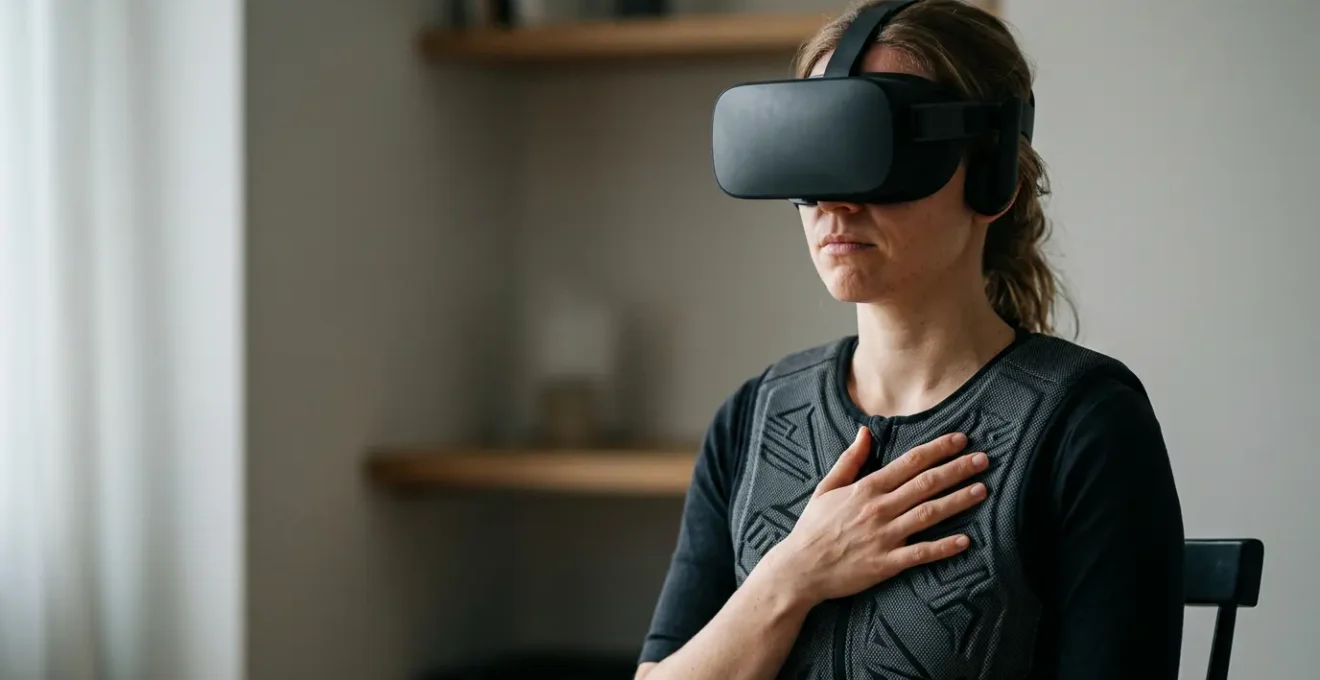
You unbox your new VR headset, excitement coursing through you. The promise of haptic immersion, of truly feeling a virtual world, is finally at your fingertips. But fifteen minutes into your first game, a familiar, dreadful sensation begins: a cold sweat, a tightening in your stomach, and a wave of nausea that forces you to rip the headset off. This experience, known as cybersickness, is the single greatest barrier preventing new users from enjoying the full potential of virtual reality.
Common advice often revolves around using comfort settings like teleportation, taking frequent breaks, or pointing a fan at your face. While these tips offer temporary relief, they don’t address the root cause of the problem. They are crutches, not a cure. They fundamentally limit your experience, keeping you from the fluid, unrestricted movement that defines true immersion. Many users resign themselves to a limited VR experience, forever tethered to these comfort settings, or abandon their expensive new hardware altogether.
But what if the solution wasn’t to merely avoid discomfort, but to systematically eliminate it? As a researcher in virtual reality usability, my focus is on vestibular adaptation—the remarkable ability of our brains to recalibrate to new sensory environments. The key isn’t to run from the sensory conflict that causes nausea, but to teach your brain how to resolve it. This is not about willpower; it is about a deliberate, scientific training process.
This guide moves beyond the surface-level tips. We will first deconstruct why cybersickness happens from a neurological perspective. Then, we will analyze the trade-offs of common anti-sickness settings and explore how haptic feedback can be an ally, not an antagonist. Most importantly, we will provide a structured, 14-day exposure protocol designed to help you build complete vestibular immunity, allowing you to finally enjoy the deep, haptic immersion you’ve been waiting for.
This article provides a complete roadmap to developing your ‘VR legs’. The following sections will guide you through the science, the settings, and the practical steps needed to achieve comfortable, long-duration play.
Summary: A Researcher’s Guide to Haptic Immersion Without Motion Sickness
- Why Smooth Locomotion Disconnects Your Inner Ear and Triggers Severe Nausea?
- Which Anti-Sickness Setting Preserves Immersion Best Between Teleportation and Vignette Movement?
- How to Calibrate a Haptic Vest to Enhance Immersion Without Overwhelming the Senses
- The « Pushing Through » Mistake That Associates Your Headset With Permanent Nausea
- How to Sequence Your Daily VR Exposure to Build Complete Vestibular Immunity in 14 Days
- Why Algorithmic Short-Form Video Destroys Your Capacity to Enjoy Slow-Burn Narratives?
- The Forced Relaxation Trap That Actually Increases Internal Panic Symptoms
- How to Elevate Your Digital Entertainment Diet to Cure Chronic Evening Doomscrolling
Why Smooth Locomotion Disconnects Your Inner Ear and Triggers Severe Nausea?
The debilitating nausea many experience in VR, clinically termed cybersickness, isn’t a sign of weakness; it’s a biological defense mechanism. The culprit is a phenomenon known as sensory conflict. Your brain operates on a predictive model, constantly cross-referencing information from your various senses to maintain equilibrium. When you use smooth locomotion in VR (moving with a joystick), your eyes see fluid, continuous movement through a virtual environment. Your brain receives a powerful visual signal that says, « We are moving forward. »
However, your vestibular system—the complex network of fluid-filled canals in your inner ear responsible for detecting motion and gravity—reports the opposite. It tells your brain, « We are stationary; there is no acceleration. » This profound contradiction between your visual and vestibular systems creates a neural alarm. Historically, the only time our bodies experienced this kind of sensory mismatch was after ingesting neurotoxins. As a result, the brain triggers its ancient poison-expulsion protocol: nausea and disorientation. This is not a software bug; it’s a deeply ingrained feature of human physiology.

The prevalence of this issue is significant; research shows that between 22–80% of participants in VR studies report some level of cybersickness. This susceptibility can be further influenced by factors like age. For instance, the same clinical research demonstrates that the 40-59 years age group showed a greater increase in cybersickness compared to younger users, suggesting that vestibular flexibility may change over time. Understanding this sensory conflict is the first step toward resolving it, not by avoiding movement, but by methodically retraining your brain to accept this new form of sensory input.
Which Anti-Sickness Setting Preserves Immersion Best Between Teleportation and Vignette Movement?
To combat the sensory conflict inherent in smooth locomotion, developers have created several comfort settings. The two most common are teleportation and vignette (or « tunnel vision ») movement. Each offers a different compromise between comfort and immersion, and understanding their mechanisms is key to using them as effective, temporary training wheels.
Teleportation works by instantly transporting you from point A to point B, completely bypassing the visual sensation of movement. This drastically reduces sensory conflict because your eyes and inner ear both agree that no travel occurred between the points. A recent 2025 study found that Teleportation scored 1.8 ± 0.9 on the cybersickness scale, compared to a much higher 2.9 for continuous smooth locomotion, confirming its effectiveness. However, this comfort comes at a cost. The same study highlighted that this method can negatively impact your sense of spatial orientation and environmental awareness, as you don’t form a mental map of the space you’re « traveling » through. It breaks the illusion of a contiguous world.
Vignette movement tackles the problem differently. When you move using the joystick, it dynamically darkens the periphery of your vision, creating a « tunnel. » This technique reduces the amount of optical flow—the streaming visual motion—that your brain has to process. By limiting motion to the center of your view, it lessens the intensity of the visual signal, making the conflict with your vestibular system more manageable. While often more immersive than teleportation, it’s a constant visual reminder that you’re in a mediated experience. The best setting is subjective, but the goal should be to use them as a means to an end: to allow you to stay in VR long enough to begin the adaptation process, with the ultimate goal of turning them off entirely.
Case Study: Locomotion’s Impact on Navigation and Comfort
In a comparative analysis of VR locomotion methods, researchers tasked participants with navigating virtual mazes. The study evaluated controller-based movement, hand-tracked teleportation, and continuous smooth locomotion. The results provided a clear trade-off: teleportation consistently produced the lowest cybersickness scores, but participants performed worse on spatial navigation tasks. Conversely, joystick-based smooth locomotion, while inducing more sickness initially, offered the best overall balance of navigational efficiency, usability, and user comfort once some adaptation occurred. This demonstrates that while comfort settings are effective, they can inhibit the development of a complete spatial understanding of the virtual environment.
How to Calibrate a Haptic Vest to Enhance Immersion Without Overwhelming the Senses
A haptic vest, often seen as a tool for pure immersion, can also be a powerful ally in combating cybersickness. By providing physical, tactile feedback that corresponds to in-game actions, it can help « ground » your brain and reduce the sensory disconnect. The key is proper calibration. An uncalibrated vest that simply rumbles indiscriminately adds sensory noise and can worsen disorientation. A well-calibrated vest provides meaningful sensory coherence, confirming what your eyes are seeing.
The goal is to align tactile sensations with visual events. When your virtual avatar is hit from the left, a precise vibration on your left torso reinforces that event, making the experience more believable and less conflicting for your brain. As PatentPC’s analysis on haptic adoption notes, this isn’t just a gimmick; their research review highlights that precisely-timed haptic feedback can reduce cybersickness symptoms by nearly one-fifth. This is achieved by transforming the vest from a blunt instrument of immersion into a precision tool for sensory feedback.
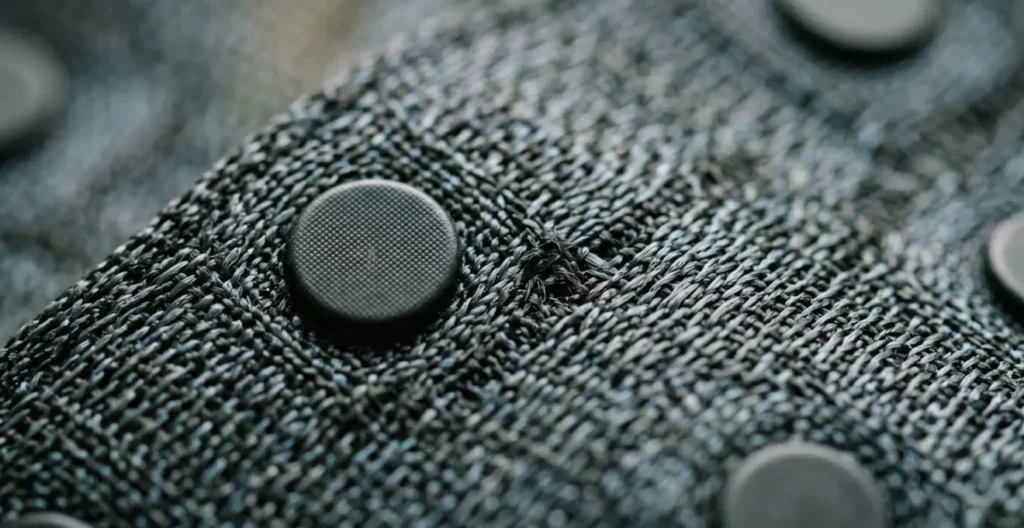
Calibration is about prioritizing « signal » over « noise. » Signal is a specific, directional cue tied to an event (e.g., a footstep, an impact). Noise is a generic, environmental rumble that lacks specific information. Start by disabling broad environmental effects and focus only on body-centric feedback. The intensity should be just enough to be clearly perceptible, not jarringly powerful. Overwhelming your senses with excessive vibration is just as bad as the initial sensory conflict.
Action plan: Calibrating haptic feedback for comfort
- Isolate Cues: Disable all environmental haptics (e.g., general rumble) and enable only direct, body-centric feedback like impact zones first.
- Set Intensity Threshold: Start with all intensity levels at their minimum. Test a single, clear event (like a punch) and gradually increase the intensity until it is clearly perceptible but not startling.
- Synchronize with Events: Test haptic pulses against visual events. Ensure the vibration from a virtual footstep or impact is perfectly timed with the visual and audio cue. Any delay creates more conflict.
- Prioritize Signal vs. Noise: Evaluate each haptic effect. Does it provide useful information (signal), or is it just ambient vibration (noise)? Keep the signals, and consider leaving the noise disabled initially.
- Phased Integration: Begin with only impact-based haptics. Once comfortable, introduce motion-based haptics like footstep vibrations. Reintroduce environmental haptics last, and at a low intensity.
The « Pushing Through » Mistake That Associates Your Headset With Permanent Nausea
When the first signs of nausea appear, many new VR users, driven by excitement, make a critical mistake: they try to « push through » it. This approach is not only ineffective but deeply counterproductive. It actively trains your brain to associate the VR headset with sickness, a psychological process known as negative classical conditioning. Every time you force yourself to stay in VR while feeling ill, you are strengthening the neural pathway that links the physical sensation of wearing the headset to the debilitating feeling of nausea.
Eventually, your brain’s predictive model begins to anticipate the sickness. The moment you see your headset, or even think about playing, your body may start to preemptively feel anxious or queasy. You are inadvertently creating a psychological barrier that can become more difficult to overcome than the initial sensory conflict itself. As the researchers at ARWall state unequivocally, « Prolonged use while nauseous only worsens symptoms. » It’s essential to treat the first hint of queasiness as a hard stop—a signal from your body that the sensory conflict has exceeded its current adaptation threshold.
Ignoring this signal has lasting consequences. While mild cases of VR sickness may disappear within an hour, forcing yourself into a severe episode can leave you feeling unwell for much longer. Pushing through doesn’t build resilience; it deepens the trauma to your vestibular system and reinforces the negative conditioning. The correct approach is the opposite: short, positive, and comfortable sessions that end *before* nausea begins. This teaches your brain that VR is a safe and enjoyable environment, paving the way for gradual and lasting adaptation.
How to Sequence Your Daily VR Exposure to Build Complete Vestibular Immunity in 14 Days
Building true, lasting tolerance to VR—often called « getting your VR legs »—is an active process of vestibular rehabilitation. It’s not about passively waiting for the sickness to go away; it’s about executing a structured training plan. The principles are borrowed directly from clinical methods used to treat vestibular disorders, such as the Cawthorne-Cooksey exercises. Research into VR-based rehabilitation confirms that a protocol of gradually increasing sensory challenge is highly effective. One study on VR-based vestibular training successfully used a multi-week program that started with seated exercises and slowly progressed to standing on unstable surfaces, preventing cybersickness while building adaptation.
The core principle is graduated exposure. You start with the least challenging scenarios and incrementally increase the intensity as your brain adapts. This allows the brain’s predictive model to adjust in small, manageable steps without triggering the nausea alarm. The key is consistency and listening to your body. The goal of each session is to feel comfortable throughout and stop immediately if you feel even the slightest hint of queasiness. Each successful, sickness-free session is a victory that rewires your neural pathways for comfort.
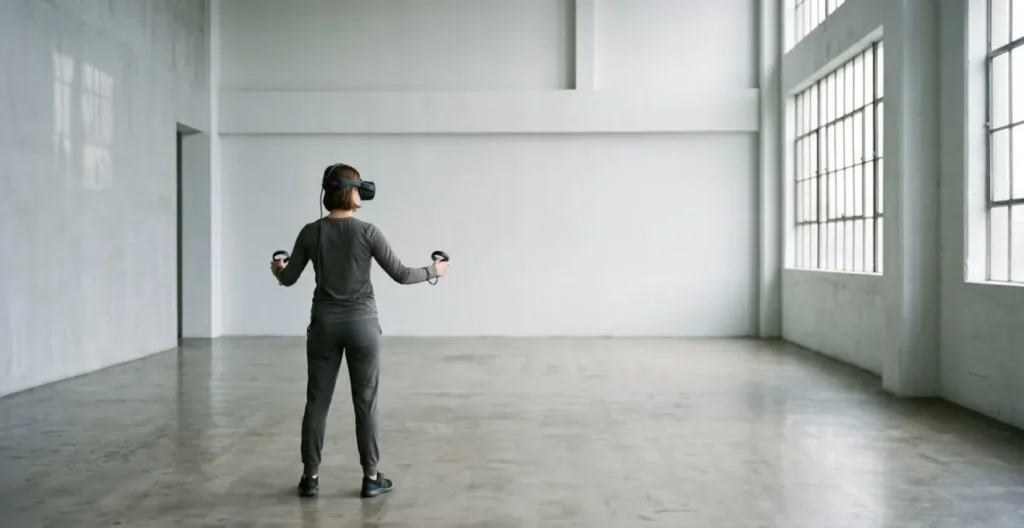
The following 14-day protocol is a structured plan to guide your adaptation. It is a template that should be adjusted based on your personal comfort level. If you feel any sickness, stop for the day and repeat that day’s session tomorrow. Never push through.
- Days 1-3: The Static World (5-10 mins/day). Sit in a comfortable chair. Use experiences with no artificial movement at all. This includes stationary games, 360-degree videos where you don’t move, or social VR apps where you remain in one place. The goal is simply to get your brain used to the headset itself.
- Days 4-6: Gentle Movement (10-15 mins/day). Remain seated. Introduce games or experiences that use teleportation for movement. Practice teleporting around a space. You can also start slowly turning your head from side to side to get your vestibular system engaged in a controlled manner.
- Days 7-9: Standing and Teleporting (15 mins/day). Now, stand up in a clear, safe space. Continue using teleportation-only locomotion. The act of standing engages your body’s proprioceptive senses more, adding another layer for your brain to integrate.
- Days 10-12: Introducing Smooth Locomotion (15-20 mins/day). This is the critical step. While standing, begin using smooth locomotion (joystick control) for very short bursts of 30-60 seconds. Then, switch back to teleportation for a few minutes. Alternate between the two, gradually increasing the duration of your smooth locomotion intervals as you feel comfortable. Use a vignette setting if needed.
- Days 13-14: Extending Smooth Locomotion (20-30 mins/day). Continue to increase the time you spend using smooth locomotion. Start to decrease the vignette comfort setting. By this stage, your brain should be actively learning to reconcile the sensory conflict, and the periods of comfortable smooth movement will become longer and longer.
Why Algorithmic Short-Form Video Destroys Your Capacity to Enjoy Slow-Burn Narratives?
In our digital lives, we are conditioned by algorithmic short-form video platforms to expect instant gratification. An endless scroll delivers a new dopamine hit every few seconds, training our brains to devalue patience and abandon anything that doesn’t provide an immediate payoff. This mindset is fundamentally incompatible with the process of VR adaptation. Building your VR legs is the antithesis of doomscrolling; it is a « slow-burn narrative » of sensory recalibration.
There is no 15-second hack to vestibular immunity. The process requires a deliberate investment of time and a commitment to incremental progress. The short-form video mindset encourages you to « swipe away » from any friction or discomfort. If you apply this logic to VR, you will abandon the effort at the first sign of queasiness and never build the necessary tolerance. Enjoying deep, narrative-driven VR games—the very experiences that represent the pinnacle of the medium—requires the capacity to endure a slow buildup and invest in a long-term payoff.
Therefore, a crucial part of your VR journey is a mental one. You must consciously shift from a mindset of « instant entertainment » to one of « deliberate training. » See your first two weeks with the headset not as a frantic rush to play the most intense games, but as a mindful training regimen. Celebrate the small victories: a 10-minute session with no sickness, the first time you use smooth locomotion for 60 seconds without issue. This patient, process-oriented approach will not only cure your cybersickness but may also help you better appreciate the slow, rewarding narratives that immersive VR has to offer.
The Forced Relaxation Trap That Actually Increases Internal Panic Symptoms
When the initial wave of queasiness hits in VR, a common internal monologue is, « Just relax, don’t think about it, you’ll be fine. » This attempt at forced relaxation is a well-intentioned trap that often backfires, increasing the internal panic it’s meant to quell. This psychological phenomenon, known as the « ironic process theory, » dictates that actively trying to suppress a thought or sensation often makes it more prominent.
By focusing your mental energy on *not* feeling sick, you are, in fact, constantly monitoring your body *for* signs of sickness. Every internal sensation is magnified and scrutinized. Is that a slight lurch in my stomach? Did my head just feel a little swimmy? This hyper-vigilance creates a feedback loop of anxiety. The fear of getting sick makes you more aware of the physical symptoms, and this heightened awareness amplifies the anxiety, which in turn worsens the physical symptoms. You are essentially putting your own discomfort under a microscope.
Instead of trying to force relaxation, the more effective approach is one of mindful acceptance and strategic distraction. Acknowledge the sensation without judgment: « Okay, I’m starting to feel a little off. That’s the sensory conflict I read about. » Then, immediately take action. Don’t fight the feeling; end the session. Take the headset off and focus your attention on something concrete in the real world. Touch a textured surface, look at a distant object, take a sip of cool water. This breaks the internal feedback loop and allows your system to reset naturally, without the added layer of performance anxiety that comes from trying to « relax » on command.
Key takeaways
- VR sickness is a solvable problem caused by a sensory mismatch, not a permanent condition.
- A structured, gradual exposure plan is the only reliable method for building long-term tolerance, or « VR legs. »
- « Pushing through » nausea is the biggest mistake, as it creates a negative psychological association with the headset.
How to Elevate Your Digital Entertainment Diet to Cure Chronic Evening Doomscrolling
Successfully integrating VR into your digital life is about more than just overcoming motion sickness; it’s about making a conscious choice to engage with a more active, rewarding form of entertainment. The journey from nausea to immunity, guided by the principles of vestibular adaptation, is an investment. The payoff for this investment is access to a medium that offers a level of engagement far beyond the passive consumption of a social media feed.
The effort is demonstrably worth it. When used in contexts like physical therapy, the engaging nature of VR has a profound effect on motivation. For example, studies show that 73% of patients found the VR-based training more enjoyable and motivating than traditional rehabilitation exercises. This same principle applies to entertainment. Once you have your « VR legs, » you unlock a world of experiences that demand your full attention and reward you with a genuine sense of presence and accomplishment, whether you’re exploring fantastical worlds, engaging in a physical workout, or creating in a three-dimensional space.
Elevating your digital diet means choosing active presence over passive scrolling. It means dedicating a portion of your entertainment time to an activity that engages your mind and body in a meaningful way. By completing your adaptation training, you are not just fixing a technical problem; you are opening the door to a richer, more immersive form of digital interaction. You are choosing to be a participant in a new world, not just a spectator of an old one.
Your journey to conquering VR sickness and unlocking the full potential of haptic immersion starts now. Begin your 14-day adaptation plan today, be patient with the process, and commit to the deliberate training required to build your ‘VR legs’.