
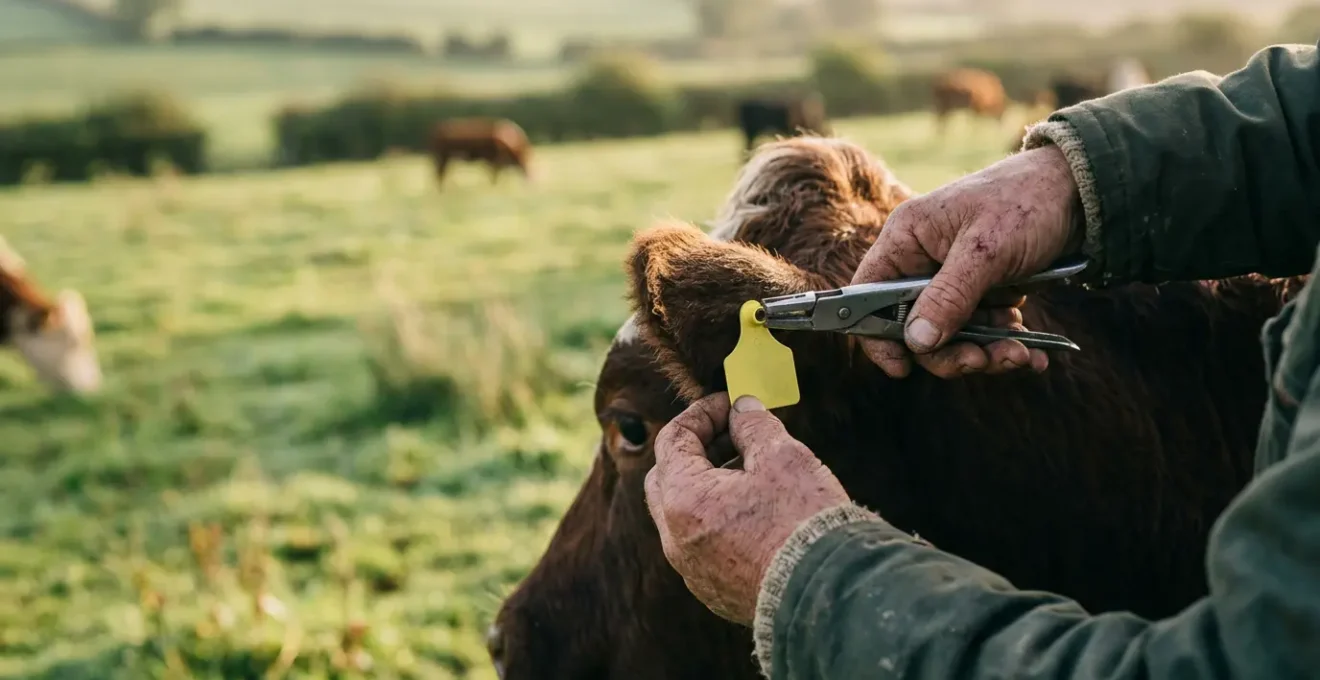
The secret to securing genuinely ethical, high-welfare meat for your family isn’t found in a single “magic” label, but in a smarter, more discerning approach to sourcing.
- Supermarket claims of “local” or “farm-fresh” are often marketing tactics, not guarantees of animal welfare or traceability.
- Real transparency comes from understanding the limitations of certifications and building direct relationships with suppliers who can answer specific questions.
Recommendation: Start building your own ‘portfolio of trust’—combining a trusted local butcher with a high-welfare farm shop or a direct bulk order—to regain control over what lands on your family’s table.
There’s a specific kind of unease that comes with standing in the brightly lit meat aisle of a supermarket. As a parent, you’re juggling price, convenience, and a growing concern about what’s really behind the plastic wrap. You see chicken breasts plumped to an unnatural size, labels whispering promises of “farm-fresh” and “natural,” and you wonder. Are the hormones a myth? What does “welfare-assured” actually assure? You want the best for your family, but the path to finding it feels obscured by confusing messages and a lack of real transparency.
The common advice feels inadequate. “Buy organic,” they say, but the price is steep and the standards can be confusing. “Support local,” but what does that mean when a big brand slaps a pastoral scene on a factory-farmed product? These well-meaning suggestions often fail to address the core of the problem: the vast, opaque, and often broken supply chains that separate us from the source of our food. The system itself is designed to keep you at a distance, making informed choices feel almost impossible.
But what if the solution wasn’t about finding one perfect, all-encompassing label? What if, instead, it was about understanding the systemic fractures in the conventional model and learning how to navigate around them? This guide is built on that premise. It’s about shifting from a passive consumer to an active, informed sourcer of your family’s food. We will dismantle the myths, give you the tools for “conversational diligence” with your butcher, and show you how to build a personal “portfolio of trust” with producers who share your values. It’s time to close the gap between the farm and your table.
This article provides a clear roadmap to navigate the complex world of meat and seafood sourcing. By breaking down the key issues and offering practical steps, it empowers you to make choices that are better for your family, for animal welfare, and for the farmers who are doing things right.
Summary: Your Roadmap to Ethical Meat Sourcing
- Why Supermarket Supply Chains Cannot Guarantee Animal Welfare Despite High Prices?
- How to Approach Independent Butchers for Honest Conversations About Abattoir Proximity
- Which Actually Means Better Living Conditions Between Organic Certification and Pasture-Raised Labels?
- The Local Washing Deception Used by Big Brands to Mimic Artisan Farms
- When to Order Half a Rare-Breed Pig Direct to Maximise Cost Savings
- Which Truly Benefits British Farmers Between Independent Farm Shops and Supermarket Local Aisles?
- Why Farm-Raised Salmon Often Causes More Ecological Damage Than Wild Catch?
- How to Demystify Certified Sustainable Seafood Sourcing at UK Supermarket Counters
Why Supermarket Supply Chains Cannot Guarantee Animal Welfare Despite High Prices?
Supermarket supply chains fail to guarantee animal welfare primarily due to their scale, complexity, and focus on cost-efficiency over ethical standards. The long journey from farm to shelf involves multiple stages—breeders, growers, transport, abattoirs, processors, and distributors—where transparency is lost and accountability is diffused. At each step, the priority is uniformity and speed, which often directly conflicts with an animal’s basic needs.
This systemic fracture isn’t a new problem. As far back as the 1990s, industry experts were highlighting significant welfare failures. In a landmark survey of beef slaughter plants, renowned animal welfare scientist Temple Grandin found widespread issues with basic procedures. As she noted from the USDA survey results, “In 1996, only 3 of 10 plants were able to correctly stun 95% of the cattle with a single shot, which is an industry guideline for animal welfare.” When the system struggles with such a fundamental standard, it reveals a deep-seated disconnect from genuine welfare principles.
While that data is historical, the core issue persists and is reflected in modern assessments. Even with decades of “improvements” and the introduction of numerous welfare labels, the industrial model struggles to deliver. For example, a recent analysis of major US retailers found that the majority are still failing. While this data is from the US, it illustrates a wider trend in Western food systems where large-scale retail puts immense pressure on suppliers. The 2024 ASPCA Supermarket Scorecard revealed that 64% of the largest supermarkets received a failing grade on animal welfare, showing that even with high retail prices, the money often isn’t translating into better lives for animals.
The fundamental conflict is that a system built for anonymous, high-volume commodities cannot easily accommodate the principles of traceability and individual animal care. The price you pay at the checkout is more reflective of marketing, logistics, and retail overheads than it is of a farmer receiving a fair price to raise an animal in a high-welfare environment. This is the first and most crucial understanding on the path to ethical consumption: the supermarket, by its very nature, is often part of the problem, not the solution.
How to Approach Independent Butchers for Honest Conversations About Abattoir Proximity
Stepping into an independent butcher shop is one of the most powerful moves you can make towards traceable meat. Here, you have the opportunity for a direct conversation, a chance to build a relationship and practice what we can call “conversational diligence.” But to make it effective, you need to know the right questions to ask. One of the most revealing is also one of the most overlooked: “How far do the animals travel to the abattoir?”
This question cuts through a lot of noise. Long, stressful journeys to a slaughterhouse can release stress hormones like cortisol into an animal’s muscles, which can negatively affect the meat’s quality, texture, and flavour. A butcher who knows the answer, and ideally sources from farms using a nearby, small-scale abattoir, is demonstrating a commitment to both animal welfare and meat quality that goes far beyond a simple label. It’s a sign they are connected to their supply chain in a meaningful way.
The stress of transport is such a significant issue that innovators are developing radical solutions to eliminate it entirely. This demonstrates the high value placed on proximity by those at the forefront of ethical meat production.
Case Study: Eliminating Transport Stress with Mobile Processing
To understand the importance of reducing transport stress, look at the model pioneered in Australia. An innovative company, Provenir, developed a mobile slaughtering unit that allows processing to happen directly on the farm. This completely eliminates live animal transport, which they identified as a key factor compromising meat quality and animal welfare. The system not only avoids the stress of travel but also allows for comprehensive traceability data to be captured right at the source. This model’s success proves there is a strong link between minimising stress, enhancing traceability, and producing superior quality meat.
So, when you approach your butcher, do it with curiosity, not accusation. Start with a simple “I’m trying to learn more about where my food comes from.” Then, ask about the abattoir. If they can tell you the name, the town, and that it’s only 30 miles away, you’ve found a vital link in your portfolio of trust. If they don’t know, or are vague, it suggests their connection to the source is as distant as a supermarket’s. That answer, in itself, is all the information you need.
Which Actually Means Better Living Conditions Between Organic Certification and Pasture-Raised Labels?
Navigating the wall of labels on meat packaging can feel like a test you haven’t studied for. Two of the most prominent—”Organic” and “Pasture-Raised”—both sound positive, but they refer to different aspects of an animal’s life and are not mutually exclusive. Understanding their distinct meanings is a cornerstone of developing true label literacy and making choices that align with your values.
“Organic” is primarily a standard about inputs. The certification, governed by bodies like the Soil Association in the UK, guarantees that the animal was fed 100% organic feed (free from synthetic pesticides and GMOs), was not given routine antibiotics, and had some access to the outdoors. However, the definition of “access” can vary. It guarantees a baseline of welfare and environmental consideration, focusing heavily on what the animal consumes and the chemicals it avoids.
“Pasture-Raised,” on the other hand, is a standard about environment and behaviour. This label is focused on giving animals the space and freedom to express their natural instincts. While it is not always legally regulated as strictly as organic, certifications from bodies like Certified Humane are creating robust standards. For example, to be certified as pasture-raised, a farm must provide 108 square feet of outdoor space per chicken, which they must be able to access for a significant portion of the day. This is a stark contrast to “free-range,” which can mean as little as a small, bare-earth yard attached to a crowded barn.
So, which is better? It’s not a simple case of one being superior. An organic chicken could live its life in a barn with a small, uninviting patch of dirt for “outdoor access.” A pasture-raised chicken could be roaming on grass but be given non-organic feed. The ideal scenario for many is to find a product that is both pasture-raised and organic, but this is a rare and premium standard. When forced to choose, your decision depends on your priority: if your main concern is avoiding GMOs and pesticides in the feed, choose organic. If your priority is ensuring the animal lived a life with freedom of movement and access to a natural environment, “pasture-raised” is the more meaningful term.
The Local Washing Deception Used by Big Brands to Mimic Artisan Farms
As consumer demand for local, ethically sourced food grows, a deceptive marketing practice has become rampant: “local washing.” This is where large corporations use packaging, branding, and vague language to create the impression that their mass-produced products come from small, idyllic artisan farms. They co-opt the language of the local food movement—using terms like “farm-fresh,” “country-style,” or naming a product line after a picturesque region—without any of the underlying substance of traceability or high welfare.
This tactic is a deliberate attempt to exploit your desire to do the right thing. The Animal Legal Defense Fund notes that these multimillion dollar marketing campaigns misrepresenting products from factory farms as local food are a core part of “humane washing.” They rely on imagery of rolling green hills and red barns on the packaging, even when the animals themselves were raised indoors in crowded, industrial conditions. Words like “Natural” are particularly misleading; the USDA’s definition, for instance, only relates to minimal processing after slaughter and has no bearing on how the animal was raised.
To avoid being misled, you must learn to distinguish between meaningless marketing fluff and genuinely verifiable terms. A specific farm name you can Google, a third-party certification with published standards, or a scannable QR code linking to the actual farm are signs of real transparency. Anything less should be viewed with scepticism.
The following table breaks down some of the most common deceptive phrases and contrasts them with terms that carry real weight, providing a practical tool for your next shopping trip.
| Deceptive / Meaningless Terms | Why It’s Misleading | Meaningful / Verifiable Terms | What to Look For |
|---|---|---|---|
| “Farm-Fresh Style” | No legal definition; implies farm origin without proof | “Single-Origin: [Farm Name], [Town]” | Specific farm name and location you can verify |
| “Country-Inspired” | Pure marketing imagery with no welfare standards | “Certified Animal Welfare Approved by AGW” | Third-party verified certification with audits |
| “Natural” / “Responsibly Raised” | USDA defines ‘natural’ only as minimally processed—no animal welfare requirement | “USDA Organic” or “Certified Humane” | Legal standards with outdoor access and feed requirements |
| “A Taste of [Region]” | Geographic name used for branding, not origin | “Pasture-Raised: [Certification Body]” | Certification requiring 108+ sq ft outdoor space per bird |
| Imagery of green pastures on packaging | Stock photo; animals may be warehoused indoors | “Traceable via QR Code to Farm” | Scannable code linking to actual farm data and photos |
When to Order Half a Rare-Breed Pig Direct to Maximise Cost Savings
For families committed to ethical sourcing, the cost can be a significant barrier. Buying high-welfare, pasture-raised meat from a farm shop or butcher is undoubtedly more expensive than the supermarket equivalent. However, there is a strategy that can dramatically lower the per-kilo cost while giving you unparalleled traceability: buying in bulk, directly from the farm. Ordering a quarter of a cow, a whole lamb, or half a rare-breed pig might sound extreme, but it’s a traditional practice that embodies the “economic scale-down” principle.
This approach transforms your relationship with meat consumption. You are no longer just a consumer picking a packet off a shelf; you are directly investing in a farmer and their ethical practices. You get to know the breed, the farm, and the process. The “when” to do this is when you are ready to make a modest upfront investment in both finances and freezer space, in exchange for long-term savings and peace of mind. It’s a move for those who have decided to make high-welfare meat a non-negotiable part of their diet and are looking for the most economical way to sustain it.
The key is to understand the “true cost.” It’s not just the price per pound of the hanging weight. You must factor in butchery fees, potential delivery costs, and the upfront cost of a chest freezer if you don’t have one. However, when you do the maths, the final cost per pound of usable meat—from prime cuts like loin chops and belly to mince, sausages, and bones for stock—is often significantly less than buying those same cuts individually at retail. To make an informed decision, you need a clear framework for calculating the total outlay.
Your Action Plan: Calculating the True Cost of a Bulk Meat Purchase
- Calculate initial outlay: Multiply hanging weight by price per pound (typically £6-9/lb for rare breeds in the UK).
- Add butchery and processing fees: Typically £0.50-1.00 per pound of hanging weight for cutting, wrapping.
- Factor delivery or pickup costs: Rural farms may charge £50-100 for delivery depending on distance.
- Calculate freezer investment: A chest freezer (200-300L) costs £200-400 upfront plus £40-60 annual electricity.
- Estimate waste/spoilage risk: Budget 5-10% for unfamiliar cuts you may not use or freezer-burn loss over time.
- Divide total cost by usable pounds to get true cost per pound and compare to retail premium cuts to assess value.
Which Truly Benefits British Farmers Between Independent Farm Shops and Supermarket Local Aisles?
For consumers in the UK wanting to support British agriculture, the choice often seems to come down to two channels: the charming independent farm shop or the conveniently located “local” aisle in a major supermarket. While both appear to put money into the pockets of local producers, the structure of these relationships and the true benefit to the farmer differ dramatically. Understanding this difference is key to making your purchasing power truly count.
Independent farm shops typically offer farmers the highest margin. When selling directly to the public or through a small, local retailer, a farmer can retain a much larger percentage of the final sale price. This model is built on a direct relationship, shorter supply chains, and a shared story. The value is not just in the product, but in the connection between the producer and the consumer. It’s a low-volume, high-margin model that fosters community and allows farmers to get direct feedback.
Supermarket “local” programs, in contrast, are a high-volume, low-margin game. While they offer farmers access to a massive customer base and the potential for large, regular orders, this comes at a cost. The negotiating power lies squarely with the corporate buyer, pushing prices down. Furthermore, there are often hidden costs for the farmer, such as slotting fees for shelf space, mandatory contributions to marketing campaigns, and stringent, often wasteful, packaging requirements that can erode their already thin margins.
The Margin vs. Volume Trade-off for UK Farmers
Analysis of supply chain dynamics confirms this trade-off. As highlighted in research connected to the ASPCA’s 2024 review of supermarket practices, farm shops can offer farmers margins of 40-60%, compared to just 15-25% from a wholesale supermarket contract. However, the volume from a supermarket can provide a level of financial stability and cash flow that farm shops cannot match. The most resilient farm businesses often use a diversified approach: using their own farm shop for high-margin sales and community building, while securing a supermarket contract for a core product to guarantee a baseline volume and income stream. This shows that while your purchase at a farm shop provides more direct and impactful support per item, both channels can have a place in a farmer’s business model.
As a consumer, your choice has a direct impact. A purchase from an independent farm shop is a potent, direct investment in that farmer’s livelihood and ethical practices. A purchase from the supermarket’s local aisle provides support, but in a more diluted form where the lion’s share of the profit is retained by the retailer. For maximum impact, prioritising the farm shop is the clear winner.
Key takeaways
- True traceability is a practice, not a purchase; it’s about asking questions and demanding transparency beyond the label.
- Prioritise “Pasture-Raised” for welfare and “Organic” for inputs, but recognise that both can be flawed if not verified by a trusted source.
- Support farmers most directly by shopping at independent farm shops or buying in bulk from the farm, cutting out the middlemen who absorb profit and obscure the story.
Why Farm-Raised Salmon Often Causes More Ecological Damage Than Wild Catch?
The logic seems simple: to protect wild fish stocks, we should eat farmed fish. However, the reality of industrial aquaculture, particularly for carnivorous species like salmon, is far more complex and often environmentally destructive. Intensive salmon farming can create a host of ecological problems that, in some cases, exceed the impact of a well-managed wild fishery. The image of clean, sustainable protein can be a mirage.
The single biggest issue is the feed conversion ratio. Salmon are predators; they eat other fish. To raise one kilogram of farmed salmon, it can take two to three kilograms of wild-caught forage fish like anchovies, sardines, and krill. This puts immense pressure on these crucial species at the bottom of the marine food web, effectively strip-mining the ocean to feed the farms. This fundamental inefficiency means that instead of relieving pressure on ocean ecosystems, industrial salmon farming is simply shifting it and amplifying it.
Beyond the feed issue, open-net pen farms, the most common type, introduce other significant problems. The high density of fish in these pens creates a perfect breeding ground for diseases and parasites, particularly sea lice. These parasites can then spread to and decimate local wild salmon populations. To combat this, farmers often use chemical treatments and pesticides, which are released directly into the surrounding marine environment. According to standards from bodies like the Soil Association, which certifies organic aquaculture, there are strict restrictions on the number of treatments for sea lice, designed to incentivise farms to locate in low-challenge sites and use preventative measures rather than reactive chemical warfare.
Finally, the waste from thousands of fish—faeces and uneaten feed—sinks to the seabed below the pens, creating anoxic “dead zones” that smother marine life and disrupt local ecosystems. When you combine the pressure on wild forage fish, the spread of disease, and the direct pollution, the picture of farmed salmon as a simple environmental solution becomes deeply problematic. While land-based, closed-containment systems offer a more sustainable alternative, they are currently a tiny fraction of the market.
How to Demystify Certified Sustainable Seafood Sourcing at UK Supermarket Counters
Applying the principles of traceability to the fish counter requires a slightly different but equally important set of skills. The certifications are different, the supply chains are global, and the stakes for our ocean’s health are enormous. Demystifying the labels and asking the right questions is the only way to ensure the seafood on your plate isn’t contributing to the degradation of marine ecosystems. It’s time to become as literate in seafood sourcing as you are in meat.
Your primary allies at the supermarket are the certification logos, but you need to know what they represent. The two most common and credible are the Marine Stewardship Council (MSC), indicated by a blue tick logo, for wild-caught fish, and the Aquaculture Stewardship Council (ASC) for farmed fish. The MSC certifies that a fishery is well-managed and not overfished, while the ASC sets standards for responsible farming, covering water quality, feed sustainability, and social responsibility. These labels are a crucial first filter.
However, even with a certification, more information provides a clearer picture. For wild-caught fish, the method of catch is hugely important. “Line-caught” or “pot-caught” methods are generally highly selective and have low bycatch (the unintentional capture of other species). In contrast, methods like bottom trawling can be incredibly destructive to marine habitats. When you have a choice, always opt for fish caught with more sustainable gear. Using a real-time resource like the Marine Conservation Society’s ‘Good Fish Guide’ app can provide instant, traffic-light-rated advice on specific species at the counter.
Your Action Plan: A Checklist for Decoding Seafood Labels
- Identify the certification label: Look for MSC (wild-caught) or ASC (farmed) logos on packaging.
- Check the method of catch statement: ‘Line-caught’ or ‘pot-caught’ are generally sustainable; ‘trawled’ can be destructive.
- Note the origin location: Some fisheries and regions have better management practices than others.
- Scan QR codes when available: These can provide detailed traceability back to specific vessels or farms.
- Cross-reference with the Marine Conservation Society’s ‘Good Fish Guide’ app in real-time at the supermarket counter.
- For farmed fish, verify ASC certification covers water quality, responsible feed sourcing, and social responsibility standards.
Start small. The next time you’re shopping, pick just one of these areas to focus on. Ask your butcher one new question. Scrutinise the label on a pack of salmon. Every small act of curiosity and diligence is a step towards a more transparent, ethical, and sustainable food system for your family and for the future.